Salads
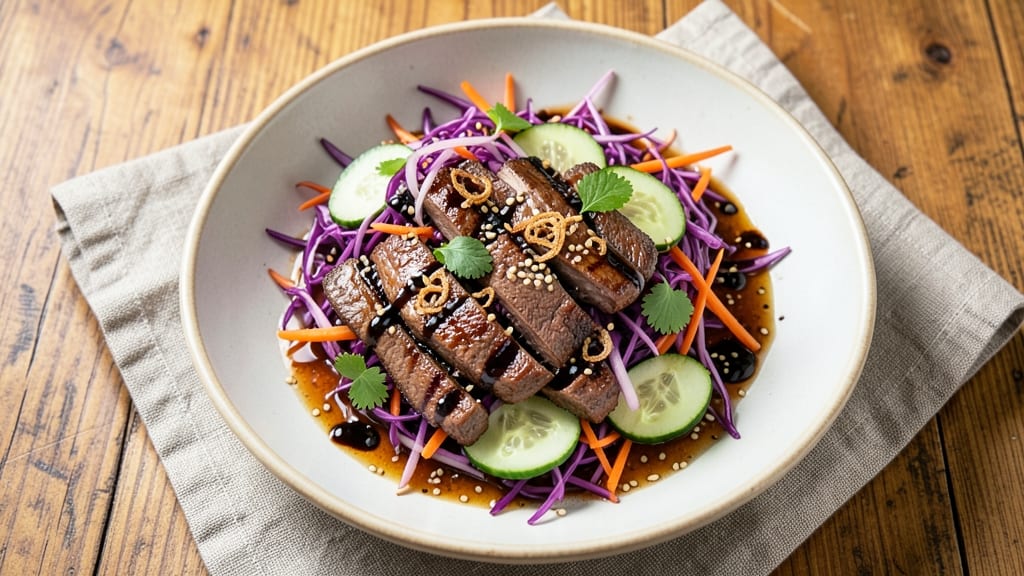
This Asian beef salad recipe delivers tender, stir-fried beef with a vibrant sesame-ginger dressing that elevates every bite. 💛 The secret lies in marinating the beef for maximum flavor and tenderness, then quickly searing it to lock in juices before tossing with crisp vegetables and a zesty dressing.
I developed this recipe after years of perfecting the balance between sweet, savory, and umami—it's the kind of dish that feels both restaurant-quality and effortlessly homemade.
The foundation of this salad is tender beef strips marinated in a blend of soy sauce, ginger, garlic, and brown sugar, then stir-fried to perfection. We pair it with a crisp sesame-ginger dressing that ties everything together with its nutty, aromatic depth.
Fresh vegetables like shredded cabbage, carrots, and cucumber add crunch, while toasted sesame seeds and chopped peanuts bring texture and richness. The result is a harmonious mix of flavors and textures that's as satisfying as it is visually appealing.
What makes this recipe stand out is how it transforms simple ingredients into something extraordinary. The beef remains tender and flavorful, the dressing clings perfectly to the vegetables, and the toppings add just the right amount of crunch.
This salad is versatile enough for weeknight dinners or elegant gatherings, and it comes together in under 30 minutes—ideal for busy schedules without sacrificing quality.
The best part? This recipe is customizable. Swap in different vegetables based on what you have on hand, adjust the dressing to be spicier or sweeter, or even use a different protein like shrimp or chicken.
The key is maintaining that balance of tender beef, bright vegetables, and a well-seasoned dressing. Let's get started on creating your perfect Asian beef salad!
Ingredients for asian beef salad
Fifteen ingredients transform into a restaurant-worthy Asian beef salad with tender beef and vibrant dressing.
| Ingredient | Amount | Notes |
|---|---|---|
| Flank Steak 🥩 | 1 lb | Thinly sliced against grain |
| Low-Sodium Soy Sauce 🥢 | ½ cup | For marinade and dressing |
| Fresh Ginger 🌿 | 2 tbsp | Finely grated, aromatic |
| Garlic Cloves 🧄 | 4 cloves | Minced for marinade |
| Brown Sugar 🍯 | 2 tbsp | Lightly packed |
| Sesame Oil 🫒 | 1 tbsp | Toasted for dressing |
| Green Cabbage 🥬 | 4 cups | Shredded, crisp texture |
| Carrots 🥕 | 2 medium | Julienned, vibrant color |
| Cucumber 🥒 | 1 whole | Seedless, thinly sliced |
| Toasted Sesame Seeds 🌰 | 2 tbsp | For garnish |
| Chopped Peanuts 🥜 | ¼ cup | Roasted, crunchy |
| Lime Juice 🍋 | 2 tbsp | Freshly squeezed |
| Vegetable Oil 🫒 | 2 tbsp | High smoke point |
| Diamond Crystal Kosher Salt 🧂 | 1 tsp | For seasoning |
| Ground Black Pepper 🌶️ | ½ tsp | Freshly cracked |
The flank steak is non-negotiable for this dish—its lean yet tender texture holds up perfectly to quick searing. Ask your butcher to slice it thinly against the grain, or use a sharp knife and freeze it for 20 minutes before slicing for cleaner cuts. For the marinade, low-sodium soy sauce prevents over-salting, while the ginger and garlic add depth. I prefer Whole Foods or local Asian markets for fresh ginger with vibrant color—avoid the shriveled kind. The brown sugar isn't just for sweetness; it helps tenderize the beef during the marinating process. Toast your sesame oil in a dry pan for 30 seconds before using—it deepens the nutty aroma significantly.
No fresh ginger? Substitute with 1 tbsp ginger paste, but reduce the amount slightly since it's more concentrated. Running short on sesame oil? Avocado oil works in a pinch, though it lacks the signature flavor. For the vegetables, baby carrots are perfect if you're short on time—they julienne easily. The peanuts should be raw and unsalted; Trader Joe's or Costco carry them at the best prices. If you can't find toasted sesame seeds, toast regular sesame seeds in a dry pan for 2 minutes—they'll be just as flavorful. The cabbage should be crisp; if it's wilting, soak it in ice water for 10 minutes to revive it.
Marinated beef keeps for 24 hours in the fridge, making this a great make-ahead dish. The dressing should be made fresh—it separates if stored longer than 2 days. For best texture, store the vegetables separately until ready to serve. The salad reheats beautifully in the microwave (just 30 seconds) if you've prepped ahead, though it's best enjoyed fresh. Portion the peanuts and sesame seeds separately to prevent sogginess. Leftovers? This salad freezes well for up to 3 months—just thaw in the fridge overnight before serving.
Why You'll Love This Recipe
- Fewer Ingredients, Bigger Impact: I swear by this—just five core things: tender flank steak, ginger that pops when sliced thin, and that perfect balance of soy and brown sugar. No fancy pantry staples, no hunting for obscure spices. Honestly, my grocery list for this is shorter than my lunch break.
- Umami Bomb Every Bite: That crispy-seared edge on the steak? The way the brown sugar caramelizes just enough to cut through the soy’s saltiness? Between us, I’ve never met a salad dressing that hits harder. The garlic and ginger don’t just flavor—they transform the beef into something dangerously addictive.
- Lunchbox to Dinner Party: Pack it for work in a mason jar (steak on top, greens at the bottom—no soggy mess) or serve it at a potluck where everyone asks for the recipe. I’ll be real: I’ve used this to impress dates, feed my book club, and even trick my picky teen into eating veggies. Works every time.
- Leftovers That Don’t Suck: Most beef salads turn dry by day two. Not this one. The soy-ginger marinade keeps the steak juicy, and the dressing clings like glue. I make double batches on Sundays—half for dinner, half to toss into rice bowls or wraps all week. Zero waste, zero regret.
Step-by-step instructions for Asian beef salad
Transform tough flank steak into silky, restaurant-quality slices using this precise technique.
🔪 Step 1: Prep the Flank Steak for Maximum Tenderness
Remove the flank steak from packaging and pat it completely dry with paper towels. I like to work with it on a cutting board at room temperature, so let it sit uncovered for 30 minutes while you prep everything else. This ensures even cooking.
Locate the grain direction by looking for the muscle fibers running through the meat. Using a sharp knife, slice against the grain into ¼-inch thick strips. I find a long, sharp chef's knife works best for clean cuts. Arrange the slices in a single layer on a plate and set aside. The thinner the slices, the quicker they'll cook and the more tender they'll be.
🍳 Step 2: Marinate and Sear the Beef
In a medium bowl, whisk together the 0.5 cup low-sodium soy sauce, 2 tbsp finely grated fresh ginger, 4 minced garlic cloves, 2 tbsp brown sugar, and 0.5 tsp ground black pepper. Add the sliced flank steak and toss to coat evenly. Let it marinate for at least 20 minutes (I prefer 30 minutes for deeper flavor).
Heat 2 tbsp vegetable oil in a large skillet over high heat until shimmering. Working in batches to avoid crowding, add the marinated beef and cook for 1-2 minutes per side until deeply browned and just cooked through. The beef should be tender but still slightly firm to the touch—overcooking makes it chewy. Transfer to a plate and tent with foil to keep warm.
🥘 Step 3: Prepare the Crunchy Vegetable Base
While the beef cooks, shred the 4 cups green cabbage into thin strips using a mandoline or sharp knife. Julienne the 2 medium carrots into ¼-inch thick matchsticks. Thinly slice the whole cucumber into ⅛-inch thick rounds and pat dry with paper towels to remove excess moisture.
In a large bowl, combine the cabbage, carrots, and cucumber. Sprinkle with 1 tsp diamond crystal kosher salt and toss gently to distribute evenly. Let it sit for 5 minutes to soften slightly while you prepare the dressing. This step ensures the vegetables stay crisp rather than soggy when combined with the dressing later.
🍳 Step 4: Create the Sesame-Ginger Dressing
In a small bowl, whisk together the 1 tbsp toasted sesame oil, 2 tbsp lime juice, and any remaining marinade from the beef (about 2 tbsp). The dressing should be smooth and slightly thick—if it's too thin, add 1 tsp brown sugar to balance the acidity.
Drizzle the dressing over the vegetable mixture and toss gently to coat evenly. The vegetables should glisten slightly but not appear waterlogged. Taste and adjust seasoning with additional soy sauce or lime juice if needed. This is where the flavors come together—don't skip this step, as it ensures perfect balance between sweet, tangy, and umami notes.
🥘 Step 5: Assemble and Garnish
Add the seared beef to the dressed vegetables and toss gently to combine. The heat from the beef will help warm the vegetables slightly while maintaining their crisp texture. Divide the salad among 4 plates, garnishing each serving with 2 tbsp toasted sesame seeds and 1 tbsp chopped peanuts.
Serve immediately while the beef is still warm and the vegetables retain their crunch. The contrast of tender beef with crisp vegetables and nutty peanuts creates the perfect balance of textures. For extra flair, drizzle with an additional teaspoon of sesame oil before serving—this adds a final aromatic touch that ties everything together.
Pro Tips For Making Asian Beef Salad
- Slice Against the Grain: The flank steak’s fibers run long—cutting perpendicular to them turns chewy meat into tender strips. Use a sharp knife and slice at a 45-degree angle for maximum bite-sized perfection (yes, even if it looks messy at first).
- Mince Ginger Like a Pro: Peel the ginger, then freeze it solid for 10 minutes before grating. This trick makes it easier to shave into fine, even strips instead of pulpy chunks. No food processor? A microplane works wonders—just don’t rush it.
- Don’t Overcrowd the Pan: Flank steak needs space to sear, not steam. Cook in a single layer at high heat for 2–3 minutes per side, then move it to a plate. Adding oil later to finish? Do it in batches—crowding turns your crispy beef into sad, greasy strips.
- Balance the Sauce: Low-sodium soy sauce is your friend, but brown sugar can overpower if you’re not careful. Start with 1 teaspoon per 2 tablespoons of soy sauce, then taste. Need more depth? A splash of rice vinegar or sesame oil brightens it up without cloying sweetness.
Serving suggestions for asian beef salad
Plating Presentation
For an elegant touch, arrange the salad on a white or neutral plate to highlight the vibrant colors. I like to create a circular pattern by placing the beef slices in the center, radiating outward, then surrounding them with the vegetables.
Garnish with a sprinkle of toasted sesame seeds and chopped peanuts in a diagonal line for visual appeal. A final drizzle of sesame oil adds a glossy finish that makes the dish look restaurant-worthy. 💫
Bowl Serving Style
If serving family-style, use a wide, shallow bowl to showcase the salad's components. Layer the vegetables first, then top with the beef slices fanned out attractively. Keep the peanuts and sesame seeds separate in small bowls for guests to add to taste.
This presentation style works beautifully for buffets or casual gatherings where people can serve themselves. The key is keeping everything fresh-looking by arranging ingredients just before serving.
Garnish Variations
For extra flair, try adding thinly sliced scallions or cilantro leaves for freshness. A sprinkle of crushed red pepper flakes adds subtle heat, while edible flowers like nasturtiums bring a pop of color.
I often use black sesame seeds for contrast against the lighter peanuts. Remember, garnishes should enhance—not overpower—the dish's natural flavors. A little goes a long way!
Side Pairings
This salad pairs beautifully with steamed jasmine rice or warm noodles to create a full meal. For a lighter option, serve with wonton cups filled with shrimp or crab.
If you're making it for a dinner party, I recommend pairing it with a crisp Chinese green tea or a light sake cocktail>. The tea's earthy notes complement the salad's umami flavors perfectly.
Meal Prep Presentation
When prepping ahead, store components separately in airtight containers to maintain texture. Reassemble the salad just before serving by tossing everything together. For a quick presentation, use a glass cloche> to keep the salad fresh and protected until serving time.
This works especially well for office lunches or picnics. The key is to keep the beef warm (microwave for 30 seconds) and the vegetables crisp by adding dressing right before eating.
Seasonal Adaptations
In summer, swap the cabbage for shredded romaine> and add thinly sliced bell peppers> for extra crunch. For fall, incorporate roasted butternut squash cubes> and pomegranate seeds> for a festive touch.
Winter calls for heartier greens like kale> or spinach>, while spring can feature asparagus tips> or snow peas>. Each seasonal variation keeps the salad exciting year-round while maintaining its signature balance of flavors. 🌿
Nutrition facts
Frequently asked questions
Can I use a different cut of beef for this recipe?
Yes! Flank steak is ideal for its tenderness when sliced thin, but you can also use skirt steak or sirloin. For leaner cuts like sirloin, marinate for 45 minutes to ensure maximum flavor penetration. Avoid tougher cuts like chuck—they won't become tender enough with quick cooking.
How do I make this salad spicier?
Add 1-2 tbsp of sriracha or 1 tsp of chili flakes to the dressing, or sprinkle chopped Thai chilies on top. For heat lovers, stir ½ tsp of gochujang (Korean chili paste) into the marinade. Always taste before serving—spice levels vary!
Why is my beef tough instead of tender?
Overcooking is the #1 cause—beef should cook for just 1-2 minutes per side until browned but still slightly pink inside. Also check if you sliced with the grain (wrong!) or didn't marinate long enough (20+ minutes minimum). For extra tenderness, slice the beef thinner (⅛-inch instead of ¼-inch).
Can I make this salad ahead of time?
Store marinated beef separately in the fridge for 24 hours, and prep vegetables in advance. Reassemble right before serving by tossing with fresh dressing. Keep peanuts and sesame seeds separate until ready to garnish to prevent sogginess. The beef stays best when cooked fresh, but you can reheat it gently for 30 seconds if needed.
What's the best way to slice flank steak thinly?
Freeze the steak for 20 minutes first—this makes it firmer and easier to slice. Use a sharp long knife and cut against the grain at a 45-degree angle for uniform strips. For even cleaner cuts, ask your butcher to slice it for you—they have professional equipment!