Side Dishes
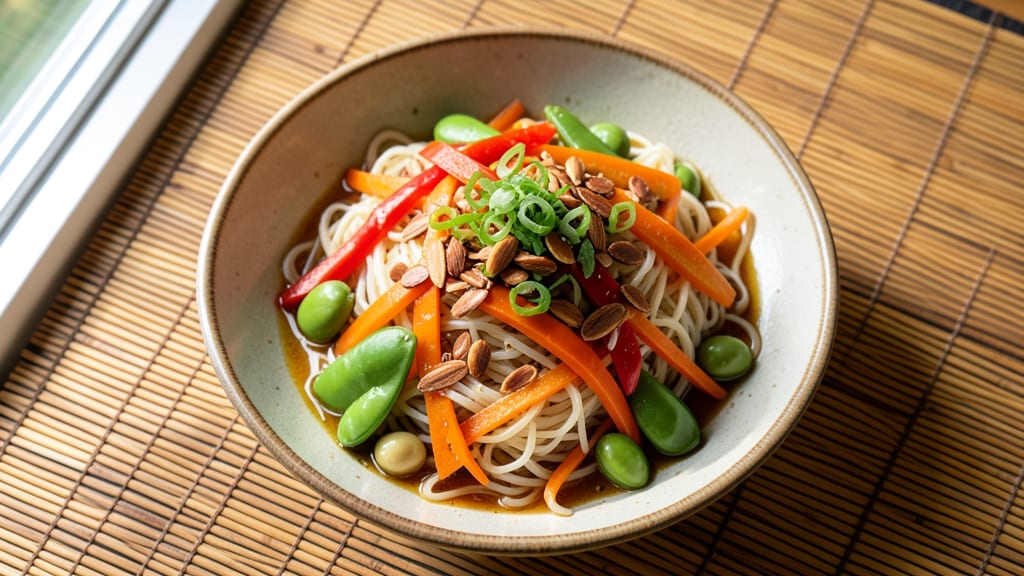
This Asian-style pasta salad transforms a classic dish into a vibrant, crunchy masterpiece with sesame-ginger dressing and almond twists. The secret lies in using rice noodles for authentic texture, paired with fresh edamame, bell peppers, and crisp carrots—all tossed in a tangy-sweet sesame dressing that balances umami and brightness.
What sets this apart is the toasted almond crunch, which adds depth and prevents sogginess, making every bite satisfyingly textured.
The recipe begins with perfectly cooked rice noodles, cooled quickly to prevent sticking, then combined with a protein-vegetable mix that delivers both color and nutrition.
The dressing—made with soy sauce, sesame oil, ginger, and a touch of honey—infuses the salad with layers of flavor, while fresh herbs and sesame seeds elevate the presentation.
This dish is designed to be restaurant-quality at home, with a balance of fresh, crisp, and savory elements that work as a standalone meal or a side for grilled proteins.
By the time you assemble this salad, you’ll have a dish that’s visually stunning and packed with contrasting textures: tender noodles, crisp vegetables, and the satisfying crunch of almonds. The sesame-ginger dressing ties everything together, creating a harmonious blend of sweet, savory, and slightly spicy notes.
It’s the kind of recipe that impresses guests while being simple enough for weeknight dinners—just 20 minutes of prep and 10 minutes of cooking.
Serve this pasta salad at summer picnics, potlucks, or as a light lunch alongside grilled shrimp or teriyaki chicken. The almond twist adds a modern fusion touch, making it stand out from traditional pasta salads. Let’s get started—your taste buds (and dinner table) will thank you.
Ingredients for asian style pasta salad
Rice noodles, fresh veggies, and crunchy almonds—this salad delivers restaurant-quality Asian flavors.
| Ingredient | Amount | Notes |
|---|---|---|
| Rice Noodles 🍜 | 8 oz | Uncooked, medium width |
| Fresh Edamame 🌱 | 1 cup | Shelled, frozen or fresh |
| Red Bell Pepper 🍅 | 1 whole | Thinly sliced, seeds removed |
| Carrots 🥕 | 1 ½ cups | Julienned or thinly sliced |
| Green Onions 🧅 | 4 whole | Thinly sliced, white and green parts |
| Slivered Almonds 🥜 | ½ cup | Toasted until golden |
| Sesame Seeds 🌿 | 2 tbsp | White or black, toasted |
| Fresh Cilantro 🌿 | ¼ cup | Chopped, stems removed |
| Soy Sauce 🥢 | 3 tbsp | Low-sodium preferred |
| Sesame Oil 🫒 | 2 tbsp | Toasted sesame oil |
| Fresh Ginger 🧄 | 1 tbsp | Grated, peeled |
| Honey 🍯 | 1 ½ tbsp | Light or wildflower |
| Rice Vinegar 🍶 | 2 tbsp | White or seasoned |
| Vegetable Oil 🫒 | 1 tbsp | For toasting almonds |
| Salt 🧂 | ½ tsp | Kosher or sea salt |
The rice noodles are non-negotiable—jasmine or vermicelli work best for that authentic chew. Grab the uncooked variety from the Asian aisle at Trader Joe's or H Mart for the best texture. Fresh edamame is ideal, but frozen shelled edamame (thawed) works perfectly too. For the bell peppers, red or yellow add vibrant color, but green works if that's what you've got. The carrots should be crisp and bright—look for baby carrots if you're short on time, but julienning gives that fancy restaurant look. Toast your almonds until they're golden and fragrant, not burnt—trust me on this.
No sesame oil? Toasted peanut oil gives a similar nuttiness, though sesame is the star here. Short on ginger? Ginger powder at half the amount works in a pinch, but fresh is worth the peel-and-grate effort. The honey adds just the right touch of sweetness—avoid dark molasses, which can overpower. For extra crunch, swap almonds for crushed peanuts or cashews. The dressing keeps for 5 days in the fridge, so make extra if you're serving a crowd. And if you're feeling fancy, add a pinch of red pepper flakes for subtle heat.
This salad tastes even better the next day—the flavors meld beautifully in the fridge. Store components separately if prepping ahead: noodles, veggies, and dressing. Toss just before serving to keep everything crisp. The dressing will thicken slightly in the fridge—stir and add a splash of water if it gets too syrupy. For meal prep, portion into glass containers with tight lids—keeps for 4 days. Pro tip: Spritz the almonds with a tiny bit of oil before toasting for extra crispiness. And if you're serving at a picnic? Pack the dressing separately to prevent soggy noodles.
Why You'll Love This Recipe
- No Boiling Fuss: I swear by the cold-soak trick—just toss rice noodles in warm water for 10 minutes, drain, and they’re ready. No sticking, no fuss, and the texture stays perfect. (Between us, this is how I survive busy nights.)
- Umami Bomb Combo: The edamame and red bell pepper? That’s where the magic happens. The fresh, slightly nutty edamame pairs with the pepper’s crisp sweetness, and the green onions add a zing that makes every bite feel like a little flavor celebration.
- Lunchbox Hero: This salad holds up for days—pack it in containers, and it’s still vibrant and delicious by Thursday. My kids actually eat their veggies this way, and honestly? That’s a win I’ll take any day.
- Budget-Friendly Powerhouse: Carrots, bell peppers, and edamame stretch this dish far without breaking the bank. I make a big batch, and it feeds my family for days while keeping costs low. (Yes, even on a Tuesday night.)
Step-by-step instructions for sesame-ginger crunch pasta salad
This vibrant Asian-inspired salad comes together in minutes with bold flavors and satisfying textures.
Prepare the Crunchy Toppings
Start by toasting the 0.5 cup slivered almonds in a dry skillet over medium heat for 3-4 minutes, stirring constantly until they turn a rich golden brown. Remove them immediately to prevent burning and transfer to a plate to cool completely. This step creates the perfect crunchy contrast to the tender noodles.
In the same skillet, heat 1 tablespoon vegetable oil over medium heat and toast the 2 tablespoons sesame seeds for 1-2 minutes until they release their nutty aroma and turn a deeper golden color. Let them cool slightly before setting aside with the almonds. The combination of these toasted elements will elevate the salad's texture profile significantly.
Cook and Prepare the Vegetables
While the toppings cool, prepare the vegetables. Thinly slice the 1 whole red bell pepper and 1.5 cups carrots into even strips about ¼-inch thick. For the 1 cup fresh edamame, if using frozen, steam for 3-4 minutes until bright green and tender. If using fresh, simply snap the pods open and remove the beans. Thinly slice the 4 whole green onions, separating the white and green parts.
Chop the 0.25 cup fresh cilantro into small pieces, removing any thick stems. Grate the 1 tablespoon fresh ginger using a fine grater or microplane. The ginger will provide that signature zing that ties all the flavors together. Keep all prepared vegetables separate until ready to combine.
Cook the Rice Noodles
Bring a large pot of water to a rolling boil and add 0.5 teaspoon salt. Add the 8 oz rice noodles and cook according to package instructions, usually 3-5 minutes, until they're tender but still slightly firm to the bite. They should be al dente when cooked - this prevents them from becoming mushy in the salad.
Drain immediately and rinse under cold water to stop the cooking process and remove excess starch. This rinse is crucial - it prevents the noodles from clumping together and keeps them light and separate in the salad. Drain well and transfer to a large mixing bowl.
Create the Flavorful Dressing
In a small bowl, whisk together the 3 tablespoons soy sauce, 2 tablespoons rice vinegar, 1.5 tablespoons honey, 2 tablespoons sesame oil, and the grated fresh ginger. Start with just the soy sauce and vinegar, then gradually add the honey and sesame oil while whisking continuously. The dressing should be smooth with a glossy sheen.
Taste and adjust the balance - you want a harmonious blend of salty, sweet, tangy, and umami flavors. If needed, add a touch more honey for sweetness or a splash of rice vinegar for acidity. This dressing is the heart of the salad, so take your time getting it just right.
Assemble and Serve
Add all the prepared vegetables to the cooked noodles in the mixing bowl. Pour the dressing over the noodles and vegetables, then gently toss everything together with your hands or clean tongs. Be careful not to overmix - you want to maintain some texture contrast in the salad.
Finally, sprinkle the toasted almonds and sesame seeds over the top. The combination of warm, nutty almonds and toasted sesame seeds will add that final crunchy element that makes this salad truly special. Serve immediately while the flavors are fresh and the textures are perfect, or chill for up to 2 hours if preferred - the flavors will meld beautifully in the refrigerator.
Pro Tips For Making Asian Style Pasta Salad
- SOAK NOODLES UNTIL FLEXIBLE: I learned this the hard way—rice noodles don’t soften like regular pasta. Soak them in warm water (not boiling) for 15-20 minutes until they’re pliable but still hold shape. Drain immediately and rinse with cold water to stop cooking—over-soaked noodles turn mushy and ruin the texture.
- JULIENNE VEGETABLES UNIFORM: Cut your carrots and bell pepper into thin, even matchsticks (about 1/8-inch thick). The key is consistency—thicker pieces stay crunchy while thinner ones soften too fast. If you’re impatient like me, use a mandoline for speed, but keep your fingers clear.
- DRESS NOODLES FIRST: Toss the drained, rinsed noodles with half the dressing right away. This coats them evenly and prevents the salad from turning soggy when you add everything later. I used to mix everything raw, and the noodles always ended up dry—this fixes it.
- SALT THE EDAMAME: Don’t skip salting the edamame pods (or shells) before adding them to the salad. A quick pinch of salt while they’re still warm makes their flavor pop—it’s the same trick I use with peas or green beans. Skip this, and they’ll taste bland even if they’re fresh.
Dietary considerations for this recipe
Gluten-Free Adaptations
This salad naturally accommodates gluten-free diets since it relies on rice noodles and fresh ingredients. Opt for certified gluten-free tamari instead of soy sauce to avoid cross-contamination—brands like San-J or Kikkoman Gluten-Free Tamari work beautifully.
Always check labels on sesame seeds and almonds, as some brands process them in shared facilities with gluten-containing products. 🌱
Nut-Free Substitutions
For nut allergies, swap slivered almonds with toasted pumpkin seeds or crushed potato chips for crunch. Roast the seeds in 1 tbsp olive oil with a pinch of salt until golden.
Store-bought gluten-free corn chips (like Tostitos) also add satisfying texture. Just ensure all ingredients are certified nut-free to prevent reactions.
Low-Carb Options
Replace rice noodles with shirataki noodles (made from konjac) for a low-carb base—these absorb flavors well and add minimal calories. Use 12 oz shirataki noodles, rinse thoroughly, and parboil for 2 minutes to remove excess starch.
Pair with extra veggies like cucumber or snap peas to bulk up the dish while keeping carbs in check.
Vegetarian Protein Boost
For a meat-free version, add 1 cup marinated tofu (pressed and cubed) or ½ cup chickpeas for protein. Toss tofu with 1 tbsp soy sauce and 1 tsp sesame oil before adding to the salad.
Chickpeas (rinsed and drained) work well too—just heat them lightly to enhance flavor. Both options keep the dish hearty and satisfying.
Dairy-Free Considerations
This recipe is already dairy-free, but double-check sesame seeds and almonds for potential cross-contamination. If serving with a protein like chicken or shrimp, ensure those are also dairy-free.
For extra richness, drizzle with 1 tbsp tahini (thinned with water) instead of sesame oil—it adds a creamy, nutty depth without dairy. ✨
Nutrition facts
Frequently asked questions
Can I use regular pasta instead of rice noodles?
While you can substitute udon or soba noodles for an Asian-inspired texture, traditional wheat pasta won't give the same delicate, slightly chewy bite. For a closer match, try rice vermicelli or jasmine rice noodles—both hold up well in salads and absorb the dressing beautifully. If you must use wheat pasta, opt for angel hair or capellini to keep it light.
How do I prevent the salad from getting soggy?
Keep the noodles and vegetables separate until the last minute, then toss gently with the dressing. For extra crunch, add toppings like almonds and sesame seeds just before serving. If prepping ahead, store components in separate containers and assemble when ready to eat. Chilling for 1-2 hours before serving also helps flavors meld without sacrificing texture.
What's the best way to adjust the spice level?
Start with no chili flakes, then taste the dressing before tossing. For mild heat, add ¼ teaspoon red pepper flakes to the dressing. For a spicier kick, increase to ½ teaspoon or add a dash of sriracha (1 teaspoon). Balance with more honey if the heat feels too sharp. Fresh ginger also adds subtle warmth—grate ½ teaspoon extra for more zing.
Can I make this salad ahead of time?
Prep all components separately: cook and cool the noodles, chop veggies, and make the dressing. Store in airtight containers in the fridge for up to 3 days. Toss everything together with fresh toppings just before serving. The flavors actually improve overnight as the dressing marinates the noodles and veggies.
What proteins pair well with this salad?
Grilled shrimp or chicken complement the salad perfectly—marinate them in soy sauce, ginger, and garlic for harmony. For vegetarian options, try crispy tofu or grilled halloumi. The salad's bright flavors also work well with seared salmon or teriyaki beef. Serve proteins on the side or mix lightly into the salad for a heartier meal.