
Salads
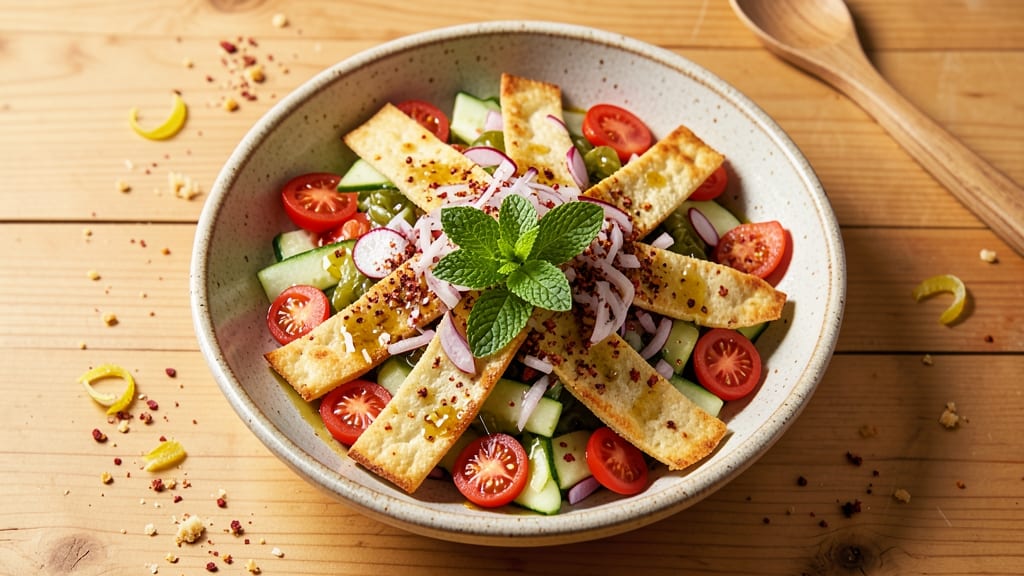
This authentic Lebanese fattoush salad recipe brings the vibrant flavors of Beirut to your table with its signature crunchy pita chips and herby zesty dressing. The secret lies in properly toasting the bread cubes until they're golden and crispy—no soggy bites here.
I've perfected this dish over years of testing, ensuring every element delivers that perfect balance of textures and tangy freshness.
The salad itself is a medley of crisp vegetables like cucumbers, tomatoes, and radishes, all tossed with a dressing that combines lemon juice, sumac, and olive oil for that signature Middle Eastern tang.
What sets this apart is the crispy pita chips, which add a satisfying crunch that contrasts beautifully with the fresh vegetables and creamy feta. The dressing is the star—bright, zesty, and just the right amount of tangy.
By the time you assemble everything, you'll have a salad that's as visually stunning as it is delicious—layers of fresh vegetables, crispy pita chips, and a vibrant dressing that ties it all together.
The flavors are bold yet balanced, with the tangy sumac and lemon cutting through the richness of the feta and olive oil. This is the kind of dish that makes you feel like you're in a bustling Lebanese café.
Perfect for summer gatherings, picnic lunches, or a refreshing weeknight dinner, this fattoush salad is versatile enough to adapt to your preferences. Whether you're serving it as a side or a main dish, it's sure to impress with its authentic flavors and satisfying textures.
Let's get started on creating this classic dish!
Ingredients for authentic lebanese fattoush salad
Crispy pita, fresh veggies, and zesty dressing—this is your Lebanese café in a bowl.
| Ingredient | Amount | Notes |
|---|---|---|
| Pita Bread 🍞 | 8 whole | Store-bought or homemade, 6-inch size |
| Fresh Cucumbers 🥒 | 2 medium | English or Persian, peeled if preferred |
| Roma Tomatoes 🍅 | 4 medium | Ripe, cut into wedges |
| Red Onion 🧅 | 1 medium | Thinly sliced into half-moons |
| Radishes 🥕 | 1 cup | Sliced thin, any variety |
| Fresh Mint Leaves 🌿 | ½ cup | Chopped, stems removed |
| Fresh Parsley Leaves 🌿 | ½ cup | Chopped, flat-leaf preferred |
| Lemon Juice 🍋 | ½ cup | Freshly squeezed, seeds strained |
| Extra-Virgin Olive Oil 🫒 | ¾ cup | High quality, fruity flavor |
| Sumac 🌶️ | 2 tbsp | Ground, for tangy kick |
| Crumbled Feta Cheese 🧀 | 1 cup | Vegetarian rennet, not pre-shredded |
| Salt 🧂 | 1 ½ tsp | Diamond Crystal preferred |
| Ground Black Pepper 🌶️ | ½ tsp | Freshly ground preferred |
| Garlic Cloves 🧄 | 3 cloves | Minced for dressing |
The pita is non-negotiable here. Arabian or Lebanese pita from Middle Eastern markets toasts best, but any 6-inch pita works. Cut into triangles before toasting, not cubes—think crispy, not crumbly. If you can't find fresh pita, Trader Joe's has great frozen pita that thaws in 10 minutes. For the veggies, farmers markets have the freshest radishes and herbs—look for vibrant color, not wilted leaves. The tomatoes? Roma are ideal, but beefsteak works too if you're in a pinch. Just make sure they're ripe—no mealy ones.
No sumac? Substitute lemon zest plus extra lemon juice—it won't be identical, but you'll still get that bright tang. Fresh herbs missing? Dried mint or parsley at half the amount works in a bind, but fresh is worth the splurge. The feta needs to be vegetarian rennet—check the label or ask your cheese counter. Pre-shredded feta gets gummy, so crumble your own from a block. For the dressing, high-quality olive oil makes all the difference—skip the cheap stuff. The garlic can be roasted for a milder flavor if you're sensitive to raw garlic's bite.
Toast the pita chips ahead of time—they'll keep in an airtight container for 2 days. Store the dressing separately in a jar, sealed with the lid on top of the olive oil layer to prevent oxidation. The salad itself stays fresh for 3 days in the fridge, though the pita loses crispness after day 1. For serving, I like to assemble it right before eating so everything stays crisp. Double the dressing if you're making this for a crowd—it's always the first thing to disappear.
Why You'll Love This Recipe
- No Chopping Chaos: I swear by this one—just slice the cucumbers, tomatoes, and radishes into thick chunks (no dicing, no fuss). The red onion gets a quick soak in cold water to mellow its bite, and the pita? Tear it, toast it, done. My lazy Sundays just got a whole lot easier.
- Crunch That Hits: That perfect balance of crispy pita, juicy tomatoes, and the sharp tang of sumac and lemon? It’s like a party in your mouth. Honestly, the radishes add this unexpected peppery kick that makes it feel special—no fancy ingredients, just pure flavor.
- Lunchbox Hero: Between us, this is my go-to for packed lunches. The dressing keeps everything fresh for days, and the pita stays crispy if you store it separately. Toss it in a bento box with grilled chicken or keep it veggie-packed—it’s equal parts meal prep and restaurant-worthy.
- Budget Crunch-Saver: Fresh veggies are cheap, pita’s a pantry staple, and you’ll use half an onion and a handful of herbs for a whole bowl. I’ll be real: my grocery bill stays low, but my fridge never looks bare. Plus, leftovers? They taste just as good cold the next day.
Step-by-step instructions for authentic Lebanese fattoush salad
Let's build this vibrant salad with crispy pita chips and a tangy dressing that captures Lebanon's bold flavors.
Create Crispy Pita Chips
Preheat your oven to 375°F and line a baking sheet with parchment paper. Cut each of the 8 whole pita breads into 8 wedges (like a pizza) for a classic fattoush presentation. Brush both sides lightly with 0.25 cup of the extra-virgin olive oil—just enough to coat without soaking through.
Arrange the pita wedges in a single layer on the baking sheet, leaving about ½ inch between each piece. Bake for 8-10 minutes until the edges turn golden brown and crispy. Watch carefully—they crisp quickly! Remove from oven and let cool completely before adding to the salad. The contrast between warm chips and cool vegetables is what makes this dish special.
Prepare the Vegetable Medley
While the pita chips cool, peel the 2 medium fresh cucumbers and cut them into ½-inch thick half-moons. Cut the 4 medium roma tomatoes into wedges and slice the 1 medium red onion into thin half-moons. Thinly slice the 1 cup radishes and chop the 0.5 cup fresh mint leaves and 0.5 cup fresh parsley leaves, removing stems as you go.
Place all vegetables in a large mixing bowl. Sprinkle with 1 tsp salt and toss gently to distribute. Let them sit for 10 minutes—this draws out excess moisture so your salad stays crisp. Drain any liquid that collects in the bottom of the bowl before proceeding. The vegetables should look vibrant and slightly wilted at the edges, which is perfect for that authentic fattoush texture.
Make the Zesty Sumac Dressing
In a small bowl, combine the 0.5 cup lemon juice, 0.5 cup extra-virgin olive oil, 2 tbsp sumac, 1.5 tsp salt, and 0.5 tsp ground black pepper. Using a whisk, blend until smooth and emulsified. Then add the 3 minced garlic cloves and mix well.
Taste the dressing and adjust seasoning if needed—you might want a bit more sumac for tang or a touch more salt. This dressing is the heart of the salad, so don't rush this step. The sumac gives that signature tangy kick that sets fattoush apart from other Middle Eastern salads. Set aside while you assemble the rest of the salad.
Assemble the Salad
In a large serving bowl, gently combine the vegetable mixture with the cooled pita chips. Sprinkle the 1 cup crumbled feta cheese evenly over the top—don't mix it in yet. Drizzle about ⅓ cup of the sumac dressing over everything and toss lightly just to combine.
Let the salad sit for 5 minutes before serving. This allows the flavors to meld slightly while keeping the pita chips crispy. When ready to serve, drizzle with the remaining dressing and toss one final time. The contrast of warm pita chips with cool, tangy vegetables and creamy feta is what makes this salad so irresistible.
Serve Immediately for Best Results
Divide the fattoush among serving plates and garnish with additional fresh mint and parsley leaves if desired. Serve immediately while the pita chips are still crisp. The salad tastes best when eaten fresh—each bite should deliver that perfect combination of textures and flavors that make this dish so special.
For an extra touch, serve with warm flatbread on the side. The combination of crispy pita chips, fresh vegetables, tangy dressing, and salty feta creates a symphony of flavors that's truly authentic to Lebanese cuisine. Enjoy with friends and family for a refreshing, flavorful meal that's perfect for any occasion.
Pro Tips For Making Authentic Lebanese Fattoush Salad
- CRISP THE PITA RIGHT: Toss the pita into a 425°F (220°C) oven for 3-4 minutes—not the broiler—until it’s golden and slightly puffed, not burnt. I learned this the hard way after charring the edges and ending up with bitter, overdone bread that ruined the salad’s balance.
- SALT THE CUCUMBERS FIRST: Toss sliced cucumbers with ½ teaspoon salt immediately and let them sit for 10 minutes before draining. This pulls out excess water so they don’t turn the dressing into soup—my grandmother swore by this, and she was right: the texture stays crisp, not soggy.
- DICE THE ONION SMALL: Cut the red onion into ⅛-inch dice, not thin slices—this keeps it from turning mushy when mixed with the dressing. I was skeptical until I tried it: the bite stays sharp, and the salad holds together better when tossed.
- TOSS THE BREAD LAST: Add the toasted pita to the salad bowl right before serving—it softens fast and turns into a sad, limp mess if you mix it in early. Works even if you’re impatient like me, but the crunch is the whole point.
Health benefits of this authentic lebanese fattoush salad
Digestive Harmony
Fattoush is a fiber-rich salad that supports digestive health thanks to its fresh vegetables like cucumbers, tomatoes, and radishes. These ingredients provide about 4 grams of fiber per serving, which aids digestion and keeps your gut moving smoothly.
The combination of soluble and insoluble fiber helps maintain a healthy balance of gut bacteria, promoting overall digestive wellness. 🌱
Hydration Boost
The high water content in cucumbers and tomatoes makes this salad incredibly hydrating—perfect for hot days or post-workout recovery. A single serving contains roughly 1.5 cups of water from the vegetables alone, helping you stay refreshed while enjoying a satisfying meal.
The lemon juice in the dressing also adds electrolytes, making it a great light lunch option.
Protein Powerhouse
While vegetarian, fattoush still packs a protein punch thanks to the 1 cup crumbled feta cheese in the recipe. This provides about 12 grams of protein per serving, supporting muscle repair and keeping you full longer.
For a vegan version, swap the feta for tofu cubes or chickpeas—both add plant-based protein while maintaining the salad's satisfying texture.
Antioxidant-Rich
Fresh herbs like parsley and mint are packed with antioxidants that combat oxidative stress in your body. Parsley alone contains lutein and beta-carotene, while mint provides rosmarinic acid—both support cellular health.
The sumac in the dressing adds polyphenols, which have been linked to reduced inflammation. Together, these ingredients create a flavorful and health-boosting combination. 💛
Low-Calorie Yet Filling
At just 350 calories per serving, this salad delivers substantial nutrients without excess calories. The fiber and protein content help curb cravings, making it an excellent choice for weight management.
The crispy pita chips add satisfying crunch without heavy calories, balancing the dish perfectly for a light yet filling meal.
Heart-Healthy Fats
The extra-virgin olive oil in the dressing provides heart-healthy monounsaturated fats that support cardiovascular health. Using 0.75 cup per recipe delivers about 120 calories from fat, but these are the good kind that help lower bad cholesterol levels. Pairing it with the salad's fiber further enhances its heart-protective benefits.
Nutrition facts
Frequently asked questions
Why does authentic fattoush use pita chips instead of regular bread?
The crispy pita chips are essential for that signature Lebanese texture! Thinly cut pita toasts to a perfect golden crunch while staying light—no heavy, soggy bread here. Traditional recipes use pita because it's gluten-free (made from bulgur wheat), absorbs flavors beautifully, and provides that satisfying contrast to fresh vegetables.
Can I make fattoush without sumac?
Yes, but you'll lose that signature tangy kick. For a substitute, mix 1 tbsp lemon zest with 1 extra tbsp lemon juice—it won't be identical, but you'll still get bright acidity. The sumac's unique citrusy flavor comes from its tartaric acid content, which is hard to replicate perfectly.
How do I keep the pita chips from getting soggy?
Toast them until golden and crispy, then let cool completely before adding to the salad. Store any leftovers in an airtight container with parchment paper between layers. For serving, assemble the salad right before eating—this ensures maximum crunch. The vegetables' moisture is what makes pita soggy, so toss them with salt first to draw out excess liquid.
What's the best way to store leftover fattoush?
Keep the components separate: store pita chips in one container, veggies in another, and dressing in a sealed jar. Reassemble only when ready to eat—this preserves the crispness. The salad itself stays fresh for 2 days in the fridge, but pita chips lose crispness after 1 day. For longer storage, freeze pita chips separately for up to 1 month.
Is fattoush gluten-free?
Traditional fattoush contains gluten from the pita bread, but you can easily adapt it! Use gluten-free pita or crispy gluten-free flatbread. For a completely gluten-free version, swap the pita chips for toasted quinoa or gluten-free crackers. The salad itself (without bread) is naturally gluten-free.