Salads
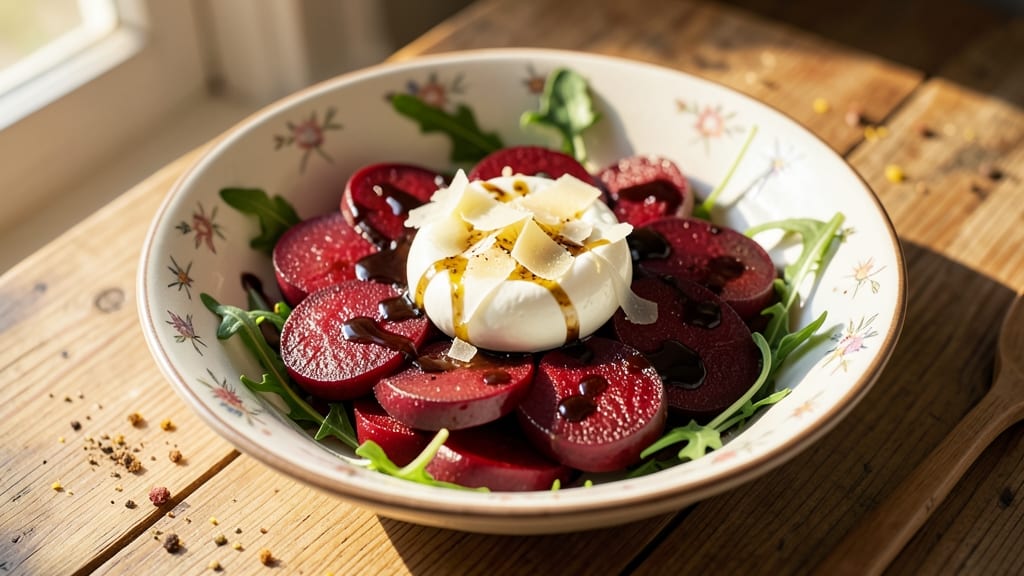
This balsamic beet and burrata salad delivers creamy luxury with every bite—roasted beets meet velvety burrata in a sweet-tart balsamic dressing that transforms simple ingredients into something restaurant-worthy.
The secret lies in perfectly roasted beets with caramelized edges and a balsamic reduction that ties everything together, creating a balance of textures and flavors that feels indulgent yet fresh.
Roasting the beets until tender yet slightly crispy unlocks their natural sweetness, while the burrata adds a luscious creaminess that makes this salad feel like a main course. A simple balsamic vinaigrette—reduced to a glossy syrup—binds the ingredients with a tangy depth that cuts through the richness.
This isn’t just a salad; it’s a foolproof way to elevate weeknight dinners with minimal effort.
The assembly is where the magic happens: vibrant greens as the base, roasted beets for sweetness, and burrata that melts slightly under the dressing. Garnish with toasted nuts or fresh herbs for texture, and you’ve got a dish that’s as beautiful as it is delicious.
Serve it as a light lunch or a sophisticated starter—either way, it’s guaranteed to impress.
For those who want to take it further, a sprinkle of flaky salt or cracked black pepper adds another layer of flavor, while a drizzle of high-quality olive oil ties everything together.
The plating is simple yet striking: arrange the beets and burrata in an inviting pile, then finish with a swirl of balsamic reduction for that final touch of elegance. This salad proves that vegetarian dishes can be just as rich and satisfying as any meat-based meal.
Ingredients for balsamic beet and burrata salad
Twelve ingredients combine to create a vegetarian masterpiece where creamy burrata meets sweet-tart balsamic brilliance.
| Ingredient | Amount | Notes |
|---|---|---|
| Medium Red Beets 🍠 | 2 whole | Organic preferred, trimmed and peeled |
| Extra-Virgin Olive Oil 🫒 | ½ cup | High-quality, fruity variety |
| Balsamic Vinegar 🍷 | ¼ cup | Aged 25 years or more preferred |
| Burrata Cheese 🧀 | 1 whole | Fresh, high-quality burrata |
| Baby Arugula 🌿 | 6 oz | Fresh, vibrant leaves |
| Pecorino Romano Cheese 🧀 | ¼ cup | Freshly grated, coarse texture |
| Toasted Walnuts 🥜 | ¼ cup | Lightly toasted, chopped |
| Flaky Sea Salt 🧂 | 1 tsp | Diamond Crystal preferred |
| Freshly Cracked Black Pepper 🌶️ | ½ tsp | Coarsely ground |
| Honey 🍯 | 1 tbsp | Wildflower preferred |
| Fresh Thyme Leaves 🌿 | 1 tbsp | Chopped, for garnish |
| Garlic Cloves 🧄 | 2 cloves | Minced, for balsamic reduction |
The beets are the foundation—organic red beets from Whole Foods Market or your local farmers' market deliver the deepest flavor. Look for firm, vibrant beets with no soft spots; they should feel heavy for their size. For the balsamic, aged 25-year balsamic vinegar from Eataly or specialty Italian markets elevates the dish with its complex, syrupy richness. Burrata must be fresh—ask your grocer for the day's delivery to ensure maximum creaminess. The arugula should be bright green and crisp; avoid wilted leaves. Walnuts can be toasted in a dry pan for 3-4 minutes until fragrant, then chopped for added texture.
No aged balsamic? Regular balsamic vinegar reduced by half works in a pinch—simmer it in a saucepan until thickened. Substitute pecorino with Parmigiano-Reggiano if preferred, but pecorino's sharpness cuts through the creaminess beautifully. For honey, agave nectar is a vegan alternative, though honey's floral notes complement the dish perfectly. If you can't find fresh thyme, dried thyme at one-third the amount suffices. The garlic should be freshly minced for the balsamic reduction—jarred minced garlic lacks the necessary punch. For extra richness, add a drizzle of high-quality extra-virgin olive oil at the end.
Store fresh beets in the fridge for up to 5 days wrapped in foil; roasted beets keep for 3-4 days in an airtight container. Burrata should be used within 2 days of purchase for optimal creaminess. The balsamic reduction can be made ahead and stored in the fridge for up to 1 week, though it thickens slightly over time—just thin with a splash of water or vinegar before using. Toasted walnuts stay fresh for 5-6 days in a sealed container, and arugula lasts 4-5 days if stored in a breathable bag with a paper towel. Assemble the salad just before serving to preserve its vibrant textures.
Why You'll Love This Recipe
- No-Cook Magic: I swear, the roasted beets are the only thing I prep—just slice them raw, toss with olive oil and vinegar, and let the balsamic work its magic while I do nothing else. That creamy burrata? It’s the star, and you can tear it in with your hands—no fancy tools needed.
- Sweet-Savory Balance: The deep earthiness of roasted beets meets the tangy bite of balsamic, then gets this luxurious, buttery burrata to soften it all into something ridiculously good. Honestly, I’ve never tasted a salad where every bite feels like a little celebration.
- Weeknight to Wedding: This is my go-to for lazy Tuesdays and when I’m hosting—same bowl, different vibes. Add a sprinkle of toasted walnuts for crunch, or a drizzle of honey for extra sweetness. It’s fancy enough for company but still feels like mealtime, not a production.
- Leftovers? More Like Leftovers: Between us, I always make double. The beets keep well in the fridge, and the burrata stays dreamy if you wrap it tightly. Toss it into grain bowls the next day, or just eat it cold—no reheating needed. That’s 20 minutes saved, right there.
Step-by-step instructions for balsamic beets and burrata salad
Assemble this elegant salad with precise technique to balance earthy beets, creamy burrata, and vibrant arugula.
👨🍳 Step 1: Roast the Beets Until Tender and Caramelized
Preheat your oven to 400°F. Wrap each of the 2 whole medium red beets tightly in aluminum foil, sealing the ends completely. This ensures even cooking and prevents them from drying out. Place them on a baking sheet and roast for 45-50 minutes until completely tender when pierced with a fork.
The beets are done when they yield easily to a paring knife and have developed a deep, glossy caramelization. Let them cool slightly before handling—they'll be extremely hot straight from the oven. Once cool enough to handle, peel away the papery skin using a vegetable peeler or your fingers. Cut each beet into ¼-inch thick slices and arrange them on a platter—their vibrant color will be the star of this dish.
🍳 Step 2: Create the Balsamic Reduction with Honey and Garlic
In a small saucepan, combine the 0.25 cup balsamic vinegar and 1 tablespoon honey. Bring to a simmer over medium heat, then add the 2 minced garlic cloves. Reduce the heat to low and let it cook for 5-7 minutes until the mixture thickens to a syrupy consistency and coats the back of a spoon.
This reduction should be glossy with a deep mahogany color—it's the perfect balance of sweet and tangy that complements the beets beautifully. Remove from heat and let it cool slightly. The reduction will continue to thicken as it cools, so don't over-reduce it. Strain out the garlic cloves if you prefer a completely smooth sauce, or leave them in for added depth of flavor.
🥘 Step 3: Assemble the Salad with Arugula and Cheeses
In a large bowl, combine the 6 ounces baby arugula, 0.25 cup toasted walnuts, and 0.25 cup freshly grated Pecorino Romano cheese. Gently toss with 2 tablespoons of the extra-virgin olive oil to lightly coat the greens. The arugula should maintain its vibrant color while being just enough to hold the other components together.
Arrange the sliced beets on a large serving platter, slightly overlapping them to create an attractive presentation. Spoon the cooled balsamic reduction evenly over the beets, allowing it to drip down the sides. This creates both visual appeal and flavor distribution. The beets should glisten with the reduction, enhancing their natural sweetness.
👨🍳 Step 4: Add the Burrata for Creamy Luxury
Just before serving, carefully tear the whole burrata cheese into 4 equal pieces, preserving its delicate, creamy interior. Place one piece at the center of each section of the salad platter. The burrata should be at room temperature for the best texture—if it's chilled, let it sit at room temperature for 10-15 minutes before serving.
Drizzle the remaining 0.3 cup extra-virgin olive oil around the platter in a decorative pattern. Sprinkle evenly with the 1 teaspoon flaky sea salt and 0.5 teaspoon freshly cracked black pepper. Finish with the 1 tablespoon chopped fresh thyme leaves scattered artistically over the top. The contrast of textures—creamy burrata, crisp arugula, and crunchy walnuts—will make each bite exciting.
🍽️ Step 5: Serve Immediately for Optimal Texture
Divide the salad among 4 plates, ensuring each portion contains a piece of burrata, a generous serving of beets, and an even distribution of arugula and walnuts. Serve immediately while the burrata is still creamy and the arugula retains its crisp texture. The warm beets will contrast beautifully with the cool, creamy cheese.
This salad is designed to be served fresh—waiting too long allows the burrata to weep and the arugula to wilt. The perfect moment to enjoy it is when the first bite delivers that harmonious blend of sweet roasted beets, tangy balsamic reduction, creamy burrata, and peppery arugula all in one forkful. Pair with a crisp white wine to complement the flavors.
Pro Tips For Making Balsamic Beet And Burrata Salad
- ROAST BEETS UNTIL TENDER: I learned this the hard way—medium red beets need a solid 45-50 minutes at 400°F (200°C), not the 30 minutes I’d guess. Wrap them in foil after 30 minutes to trap steam, then finish uncovered so the skins crisp slightly. Overcooked beets turn mushy; undercooked ones stay stubbornly firm.
- PEEL BEETS WHEN COOL: Skip the peeling rush—let roasted beets cool for 10 minutes before handling. The skins slide off effortlessly, and you avoid burning your fingers (or dropping them in frustration). Cold beets also slice cleaner, which matters when you’re pairing them with delicate arugula.
- DRESS ARUGULA LAST: Baby arugula wilts faster than you’d think. Toss it with just a drizzle of olive oil and a pinch of salt right before assembling, then fold in the beets and burrata. The dressing should coat the greens, not pool at the bottom—this keeps the salad crisp, not soggy.
- UPGRADE WITH BALSAMIC GLAZE: Skip the plain reduction—simmer 3 tablespoons balsamic vinegar with 1 teaspoon honey until it thickens to a glossy syrup. Drizzle this over the salad after plating; the caramelized contrast with creamy burrata and earthy beets is what makes this dish sing. (Yes, it’s worth the extra 5 minutes.)
Dietary considerations for these flavors
Vegetarian Protein Power
This salad delivers plant-based protein through the burrata and pecorino, making it a satisfying vegetarian meal. A single serving provides about 12 grams of protein from the cheese alone, while the walnuts add an extra 4 grams per ¼ cup.
The beets contribute fiber and natural sweetness without any animal products, creating a balanced dish that keeps you full and energized. 💪
Dairy-Free Adaptations
For a lactose-free version, swap burrata for vegan mozzarella (like Miyoko's brand) or cashew cream—blend 1 cup soaked cashews with 2 tablespoons lemon juice and 1 tablespoon nutritional yeast for a creamy alternative.
Replace pecorino with nutritional yeast for a cheesy flavor without dairy. The balsamic reduction and roasted beets will still shine as the star flavors. 🌱
Gluten-Free Guaranteed
This recipe is naturally gluten-free—no grains, flours, or hidden gluten sources are used. The beets, arugula, burrata, and walnuts are all gluten-free ingredients, and the balsamic reduction contains no wheat.
Always double-check your balsamic vinegar label, as some brands may contain additives with gluten. For extra safety, use a certified gluten-free balsamic vinegar like Bragg's. ✨
Low-Carb Options
To reduce carbs, skip the arugula and use butter lettuce or romaine instead—they’re lower in carbohydrates while still providing freshness. The beets contribute about 12 grams of net carbs per serving, but their natural sweetness makes them worth keeping.
For a keto-friendly twist, serve the salad without the beets and focus on the burrata, pecorino, and walnuts for a high-fat, low-carb option. 🥗
Allergen Awareness
This salad contains dairy (burrata and pecorino) and tree nuts (walnuts). If nut allergies are a concern, substitute walnuts with toasted pumpkin seeds or sunflower seeds for a safe alternative.
For those avoiding dairy, see the dairy-free adaptations above. Always check ingredient labels, especially for store-bought balsamic vinegar or olive oil, which may contain trace allergens. 🚨
Meal Prep Considerations
While this salad is best enjoyed fresh, you can prep components ahead for a quick assembly. Roast the beets and store them in the fridge for up to 3 days in an airtight container. Make the balsamic reduction in advance and keep it refrigerated for up to 1 week.
Assemble the salad just before serving to preserve the burrata’s creaminess and arugula’s crispness. If prepping for multiple meals, store the burrata separately and add it fresh when ready to serve. ⏰
Nutrition facts
Frequently asked questions
Can I use golden beets instead of red for this salad?
Golden beets work beautifully and add a lovely earthy sweetness that pairs wonderfully with the balsamic reduction. They'll give your salad a more golden hue while maintaining the same tender texture when roasted. The flavor profile is slightly milder than red beets, which can make the dish feel even lighter.
How do I prevent the burrata from getting too watery when assembling?
Keep the burrata chilled until just before serving, then let it sit at room temperature for 10-15 minutes to soften slightly. Use a sharp knife to carefully tear it into pieces rather than cutting through the center, which helps preserve its creamy interior. Assemble the salad immediately before serving to prevent any weeping from heat or moisture.
What's the best way to store leftovers?
Store the roasted beets and balsamic reduction separately in airtight containers for 3-4 days. Keep the burrata separate and add it fresh when ready to serve. The arugula should be stored in a breathable bag with a paper towel to maintain crispness. Reassemble the salad just before eating to preserve all the textures and flavors.
Can I make this salad ahead of time?
You can prep all components except the burrata ahead of time. Roast the beets and make the balsamic reduction 1 day in advance—they'll keep well in the fridge. Assemble the salad just before serving to maintain the perfect texture contrast between the warm beets, cool burrata, and crisp greens. The burrata should always be added fresh.
What wine pairs best with this salad?
A crisp Italian Pinot Grigio or French Sancerre complements the sweet-tart balance perfectly. The acidity in these wines cuts through the richness of the burrata while enhancing the earthy beets. For a red option, try a light Chianti—its acidity and fruitiness work surprisingly well with the dish.