
Sauces & Condiments
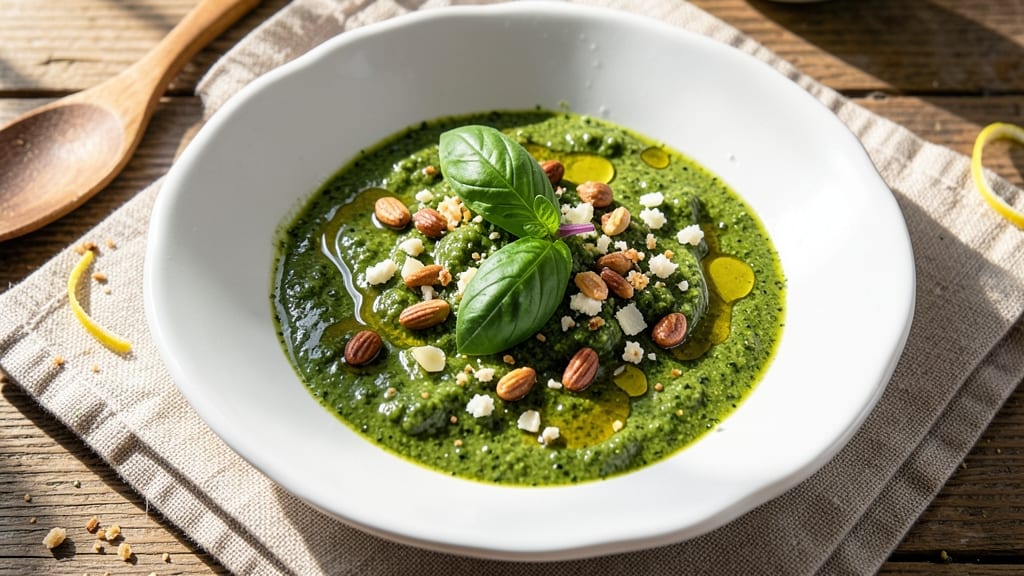
This basil pesto salad dressing recipe transforms fresh herbs into a vibrant, zesty sauce that elevates every salad from ordinary to extraordinary.
The secret lies in balancing bright basil, nutty pine nuts, and sharp Parmesan with just the right amount of olive oil and lemon juice to create a dressing that's both rich and refreshing.
What makes this version special is how quickly it comes together—no cooking required, just blending—and how versatile it is for salads, dips, or even pasta.
The foundation of this dressing is simple yet powerful: fresh basil leaves, toasted pine nuts, garlic, grated Parmesan, and extra-virgin olive oil. The key to achieving that perfect texture and flavor balance is blending the ingredients until smooth but still retaining a hint of freshness.
For an extra boost of brightness, a squeeze of lemon juice ties everything together, ensuring the dressing stays fresh and flavorful for days. This recipe is vegetarian-friendly and can easily be adapted for vegan diets with simple substitutions.
What you'll end up with is a dressing that's creamy yet light, with a bold herbaceous flavor that coats every bite of your salad perfectly.
The nutty depth from the pine nuts and the sharpness of the Parmesan create a complex flavor profile that works beautifully with greens, grilled vegetables, or even as a dip for crusty bread. The best part?
It only takes about five minutes to prepare, making it the ideal quick solution for a fresh, flavorful salad dressing.
Store any leftovers in an airtight container in the refrigerator for up to five days, or freeze for longer storage.
Whether you're prepping for a week of lunches or simply craving a quick, flavorful dressing for tonight's dinner, this basil pesto salad dressing is the perfect addition to your kitchen arsenal. Ready to make your salads shine? Let's get started!
Ingredients for basil pesto salad dressing
Fresh herbs, nutty crunch, and sharp Parmesan blend into this vibrant dressing in minutes.
| Ingredient | Amount | Notes |
|---|---|---|
| Fresh Basil Leaves 🌿 | 2 ½ cups | Packed, stems removed for best flavor |
| Toasted Pine Nuts 🥜 | 0.6 cup | Or walnuts for budget-friendly option |
| Garlic Cloves 🧄 | 4 cloves | Peeled, rough chopped for bold flavor |
| Parmesan Cheese 🧀 | ¾ cup | Freshly grated from block preferred |
| Extra-Virgin Olive Oil 🫒 | ¾ cup | High-quality, fruity variety |
| Fresh Lemon Juice 🍋 | 1 ½ tbsp | Freshly squeezed for bright tang |
| Sea Salt 🧂 | ½ tsp | Fine grain for even seasoning |
| Freshly Ground Black Pepper 🌶️ | ¼ tsp | Freshly cracked for maximum flavor |
The basil is non-negotiable here—farmers market basil has the most vibrant flavor, but grocery store containers work in a pinch. Toast the pine nuts in a dry pan for 2-3 minutes until fragrant (don't burn them!). For the Parmesan, grate it yourself—pre-shredded gets clumpy and lacks flavor. I always buy a small wedge from the deli counter since it keeps for weeks. The olive oil should be extra-virgin—cheap oil makes the dressing taste flat. Look for bottles labeled 'fruity' or 'peppery' at Whole Foods or Trader Joe's.
No pine nuts? Walnuts or cashews work perfectly—they just have a different texture. Fresh basil wilted? Dried basil at one-third the amount gets you close, but it won't be as bright. Short on Parmesan? Pecorino Romano has a sharper bite. The lemon juice can be bottled in a squeeze, but fresh is worth it—it keeps the dressing fresh-tasting for days. For a vegan version, swap the Parmesan for nutritional yeast and use a vegan olive oil (though most are already plant-based).
This dressing tastes even better the next day as flavors meld. Store it in a small glass jar with a tight lid—add a thin layer of olive oil on top to preserve freshness. Keeps in the fridge for 5-7 days or 3 months frozen in ice cube trays. I always make a double batch: one for salads, one to drizzle on grilled veggies. The leftovers make an amazing dip for crusty bread or crostini—just thin with a splash of water if it gets too thick.
Why You'll Love This Recipe
- Five-Ingredient Magic: I swear by this combo—just basil, pine nuts, garlic, Parmesan, and olive oil. No fancy gadgets, no stress, just pulse and drizzle. That’s it. Honestly, I’ve made it while chatting on the phone.
- Pine Nut Crunch: Between us, the toasted pine nuts are the star. They add this buttery, toasty crunch that makes every bite feel like a little celebration. (Yes, even on a Tuesday night.)
- Dresses Everything: This isn’t just for salads—toss it on grilled chicken, pasta, or even roasted veggies. I keep a jar in the fridge for when I’m lazy or inspired, and it never lets me down.
- No Waste, All Flavor: A little goes a long way, so you’ll have leftovers for days. I’ll be real: I’ve had this dressing last me a week, and it still tastes fresh. Plus, Parmesan’s cheap—win-win.
Step-by-step instructions for basil pesto salad dressing
Here's how to whip up this vibrant, flavor-packed dressing in record time.
Toast the Pine Nuts for Nutty Depth
Heat a dry skillet over medium-low heat and add the 0.6 cup toasted pine nuts. Stir constantly for 2-3 minutes until they turn a rich golden brown and smell irresistibly nutty. Watch them closely—they burn fast once they start to color! Remove immediately and let cool for 5 minutes before processing.
This toasting step is crucial—it enhances the pine nuts' natural oils and flavor, giving your pesto that rich, toasty base. If you're using walnuts instead, toast them for 3-4 minutes until fragrant. Let them cool completely before proceeding to prevent oil separation in your dressing.
Pulse the Herb and Nut Base
In a food processor, combine the 2.5 cups fresh basil leaves, 4 cloves garlic cloves, and the cooled pine nuts. Pulse 5-6 times until everything is finely chopped but not yet pasty. You want visible texture—this creates the perfect balance of freshness and creaminess in your dressing.
Here's the thing—don't over-process yet. You'll see tiny basil flecks and nut pieces, and that's exactly what you want. Scrape down the sides of the bowl with a spatula to ensure even blending before adding the next ingredients.
Add Cheese and Seasonings
With the processor running, add the 0.75 cup Parmesan Cheese, 0.5 tsp sea salt, and 0.25 tsp freshly ground black pepper. Process for 10-15 seconds until the cheese is fully incorporated and the mixture looks like coarse sand. This creates the perfect foundation for your dressing.
I always use freshly grated Parmesan—pre-shredded cheese contains anti-caking agents that make the dressing grainy. The pepper should be freshly cracked too; pre-ground pepper loses its punch quickly. Give everything a good taste at this stage—you can adjust seasoning before adding the oil.
Stream in the Olive Oil
With the processor running on low speed, slowly pour in the 0.75 cup extra-virgin olive oil through the feed tube. This gradual addition prevents the dressing from becoming too thick. Process for another 30-45 seconds until the mixture is smooth but still has visible texture.
The reason we add oil last is that it emulsifies the dressing. You'll see it transform from a dry mixture to a creamy, spreadable consistency. If it looks too thick, add 1-2 tablespoons of water or lemon juice to loosen it. The dressing should coat the back of a spoon but still hold its shape when drizzled.
Finish with Lemon and Adjust Consistency
Transfer the pesto to a bowl and stir in the 1.5 tbsp fresh lemon juice. Taste immediately and adjust seasoning if needed—this is your final chance to perfect the balance. The lemon brightens all the flavors and cuts through the richness of the cheese and nuts.
For a thinner dressing, whisk in 1-2 tablespoons of water or additional lemon juice. For a thicker version, chill the dressing for 30 minutes—it will naturally thicken as it cools. Store any leftovers in an airtight container in the refrigerator for up to 5 days, stirring before each use to redistribute the oils.
Pro Tips For Making Basil Pesto Salad Dressing
- STACK THE BASIL: Use 2-3 large stems of basil per serving—pack the leaves tightly into the mortar or food processor first. This forces them to break down faster and releases more flavor. I learned this the hard way after making pesto that tasted more like basil tea than a punch-in-the-arm dressing.
- TOAST PINE NUTS LOW: Pine nuts burn faster than you’d think. Toast them in a dry pan over medium-low heat, stirring constantly, until they’re just golden—not brown—about 3-4 minutes. Overcooking turns them bitter, and nobody wants that nutty regret in their salad.
- SALT THE GARLIC: Mince the garlic cloves and toss them with a pinch of salt before adding to the mortar or processor. This softens them slightly and mellows their sharpness, so the pesto doesn’t taste like a garlic punch to the face. Trust me, your salad will thank you.
- PULSE DON’T PUREE: Run the food processor in short bursts—2-3 seconds on, 10 seconds off—until the mixture is chunky but smooth. Over-processing turns pesto into a sad, oily paste. If it looks too thick, drizzle in olive oil slowly until it coats the back of a spoon like a proper dressing.
Creative variations of this recipe
Sun-Dried Tomato Twist
Swap half the basil for 2 tbsp sun-dried tomatoes (oil-packed, chopped) to add a sweet, umami depth that pairs beautifully with the fresh basil. I like to toast these in a dry pan for 1 minute first to intensify their flavor before blending.
This variation works especially well with grilled vegetables or grain salads like farro or quinoa. 🌶️
Roasted Garlic Boost
Replace the raw garlic with 2 tbsp roasted garlic for a sweeter, mellow flavor that enhances the nutty notes. Roast 6 whole garlic cloves in olive oil at 400°F for 20 minutes until caramelized, then mash before adding to the processor.
This version tastes even better the next day as the flavors meld together.
Spicy Chili-Lime Kick
Add 1 tsp chili powder and 1 tbsp lime juice (instead of lemon) for a bold, spicy-sweet dressing that works perfectly with Southwestern salads. I also like to stir in ½ tsp smoked paprika for extra depth. This variation is fantastic with black beans, avocado, and corn salads. 🌶️
Nut-Free Option
For a nut-free version, replace the pine nuts with ½ cup cooked white beans (like cannellini or great northern) for creaminess. Blend the beans with the basil, garlic, and Parmesan before adding the oil.
This version is heartier and works well as a dip for roasted vegetables or crusty bread. It keeps its texture better than nut-free alternatives that rely on seeds.
Herb Blend Fusion
Swap half the basil for a mix of 1 cup arugula and ½ cup spinach to add a peppery bite that brightens the dressing. This version has more vibrant color and pairs beautifully with rich ingredients like roasted chicken or creamy avocado.
The arugula adds a fresh, slightly bitter contrast that balances the richness of the Parmesan perfectly.
Vegan Adaptation
For a vegan version, replace the Parmesan with ½ cup nutritional yeast and use ¼ cup vegan olive oil** (like Primal Kitchen brand). Add 1 tbsp white miso paste for umami depth and 1 tsp apple cider vinegar instead of lemon juice.
This version holds up well in dressings and dips, though it may separate slightly—just stir before using. ✨
Nutrition facts
Frequently asked questions
Can I use dried basil instead of fresh?
You can substitute, but fresh basil gives the best flavor! Use 1/3 cup dried basil instead of 2.5 cups fresh—it's more concentrated. For a closer match, toast the dried basil in a dry pan for 1 minute first to intensify its aroma. The texture will be slightly different but still delicious.
How do I prevent my dressing from separating?
Separation happens when oil and water-based ingredients split. To avoid it, always blend the oil in last and slowly while the processor is running. Store it in an airtight container with a thin layer of olive oil on top to preserve freshness. If separation occurs, just whisk vigorously before using.
What’s the best way to store leftover dressing?
Keep it in an airtight glass container in the fridge for up to 5 days. For longer storage, freeze in ice cube trays—each cube makes a perfect single serving. Always stir before using to redistribute any separated oils. The flavor actually improves after 24 hours as the ingredients meld!
Can I make this dressing without a food processor?
Use a mortar and pestle or blender instead. For the mortar, crush the garlic first, then add basil and nuts, grinding until finely chopped. Stream in oil slowly while mixing. The texture will be slightly chunkier but still delicious—just pulse longer if using a blender.
What are the best salads to pair with this dressing?
This dressing shines with light greens like arugula or spinach, but also works beautifully with grilled vegetables, roasted potatoes, or pasta salads. For extra flavor, toss with cherry tomatoes, avocado, or grilled chicken. The nutty richness balances bitter greens perfectly!