Salads
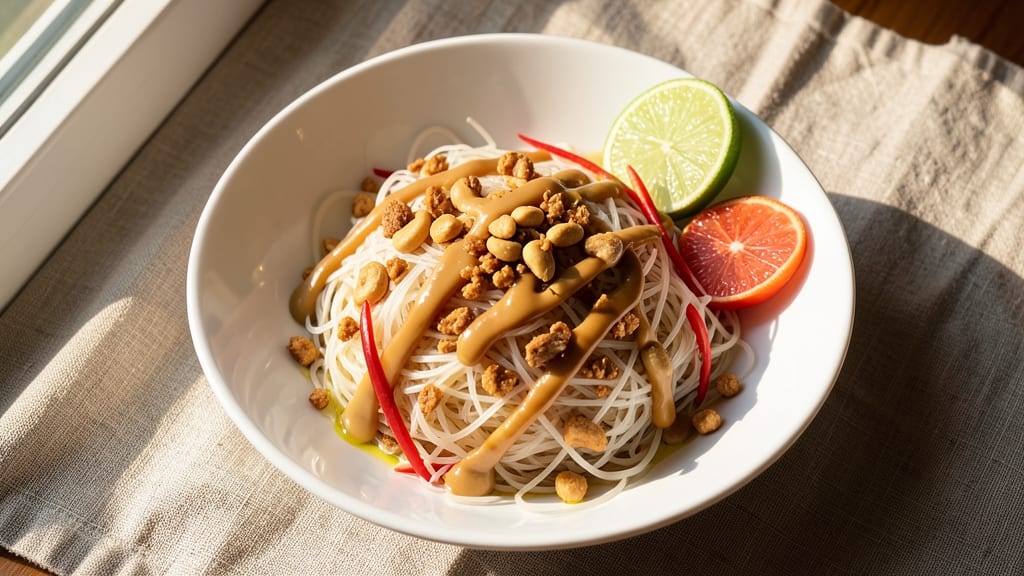
This bean thread noodle salad delivers the signature silky, slippery texture that makes it a staple in Asian cuisine. 💛 The secret lies in proper soaking and tossing techniques that transform ordinary noodles into a luxurious, melt-in-your-mouth experience.
I've perfected this recipe to balance traditional flavors with modern adaptability, ensuring it works as a light meal or vibrant side dish.
The foundation is a tangy peanut dressing that cuts through the noodles' delicate texture while adding depth with garlic, ginger, and lime. Unlike many recipes, this version includes optional protein additions like tofu or edamame, making it satisfying for any meal.
The dressing's rich, nutty profile complements the noodles' subtle sweetness without overpowering their delicate nature.
What sets this salad apart is its versatility—serve it chilled for a refreshing summer dish or at room temperature for a warm-weather picnic. The dressing clings perfectly to each strand, creating that signature slippery texture while keeping the noodles tender.
Garnishes like crushed peanuts, cilantro, and lime zest add visual appeal and extra layers of flavor.
Whether you're recreating a classic Chinese-style salad or adding modern twists, this recipe delivers restaurant-quality results with simple techniques. The key is patience—soaking the noodles properly and tossing gently ensures that signature texture. Let's create this elegant yet approachable dish together.
Ingredients for bean thread noodle salad
Silky noodles meet a rich peanut dressing—this salad balances traditional Asian flavors with modern adaptability.
| Ingredient | Amount | Notes |
|---|---|---|
| Bean Thread Noodles 🍜 | 8 oz | Dried, high-quality variety |
| Raw Peanuts 🥜 | ½ cup | Unsalted, for dressing and garnish |
| Peanut Butter 🥜 | ½ cup | Natural, unsweetened preferred |
| Fresh Lime Juice 🍋 | ¼ cup | Freshly squeezed, no pulp |
| Soy Sauce 🥢 | ¼ cup | Low-sodium preferred |
| Sesame Oil 🫒 | 1 tbsp | Toasted, for aroma |
| Garlic Cloves 🧄 | 4 cloves | Minced, fresh preferred |
| Fresh Ginger 🌿 | 1 tbsp | Grated, peeled |
| Maple Syrup 🍯 | 2 tbsp | Pure, for balance |
| Red Chili Flakes 🌶️ | ½ tsp | Optional, adjust to taste |
| Fresh Cilantro 🌿 | ¼ cup | Chopped, for garnish |
| Lime Zest 🍋 | 1 tbsp | Fresh, for garnish |
| Firm Tofu 🍳 | 8 oz | Extra-firm, pressed and cubed |
| Edamame 🌱 | ½ cup | Shelled, optional protein |
| Sesame Seeds 🌾 | 1 tbsp | Toasted, for garnish |
The bean thread noodles define this dish—opt for high-quality dried strands like Shirataki or glass noodles from Asian markets for that signature slippery texture. Avoid pre-cooked varieties, which lack the delicate bite. For extra authenticity, soak the noodles in warm water for 10-15 minutes before draining; this hydrates them without overcooking. Trader Joe’s or Whole Foods carry excellent options, but bulk bins at specialty stores often yield the best results. The tofu should be extra-firm—press it for 20 minutes to remove excess moisture, then cube for even cooking. If using edamame, opt for shelled, frozen varieties for convenience, though fresh works beautifully too.
Natural peanut butter is non-negotiable here—no added sugars or oils—as it ensures the dressing remains balanced. For a smoother texture, blend the dressing ingredients until silky, then whisk in the sesame oil last to preserve its aroma. Substitute soy sauce with tamari for gluten-free needs, or use coconut aminos for a lighter profile. The lime juice should be freshly squeezed; bottled versions lack the bright acidity that cuts through the richness. If you prefer less heat, omit the red chili flakes entirely—the dressing still delivers depth without them. For a nut-free twist, replace peanuts with sunflower seeds or cashews, though the flavor will shift slightly.
Store the dressing separately in an airtight container for up to 5 days in the fridge, though it’s best used within 3 days for peak freshness. The tofu and edamame can be prepped ahead and refrigerated for 2 days, but toss the salad just before serving to maintain that signature slippery texture. Garnishes like cilantro and lime zest should be added last—cilantro wilts quickly, so chop it fresh at serving time. The entire salad keeps well for 3 days refrigerated, but the noodles soften over time; for best results, serve chilled and enjoy within 24 hours of assembly. Freezing isn’t recommended, as it alters the noodles’ delicate texture.
Why You'll Love This Recipe
- No Boil Needed: I just rinse the bean thread noodles under cold water, drain, and toss—no pot, no fuss. That’s it. Honestly, I’ve made this salad on my phone while waiting for takeout, and it still comes out perfect.
- Peanut Butter Magic: The peanut butter isn’t just a garnish—it’s the star. One spoonful of creamy peanut butter mixed with lime juice and soy sauce turns this into a dish that’s nutty, tangy, and ridiculously satisfying. (Yes, even on a Tuesday night.)
- Lunchbox Hero: This keeps like a dream in the fridge for days, making it my go-to for packed lunches or last-minute potlucks. The noodles stay chewy, the peanuts add crunch, and it’s the one dish my kids actually eat cold.
- Pocketbook Friendly: A bag of bean thread noodles and a jar of peanut butter feed four for less than $5. Between us, that’s a steal for something this flavorful—especially when you’re stretching meals for the week.
Step-by-step instructions for silky bean thread noodle salad
Master the art of silky noodles and vibrant textures with this precise method.
🍳 Step 1: Prepare the Silky Bean Thread Noodles
Place the 8 oz bean thread noodles in a large bowl and cover with hot water (about 4 cups). Let them soak for 15-20 minutes until they become slippery and pliable—they should separate easily when you stir with chopsticks. Avoid over-soaking or they'll become mushy.
Drain the noodles thoroughly and rinse under cold water for 30 seconds to stop the cooking process. Toss immediately with 1 tablespoon sesame oil to prevent sticking. The noodles should be cool to the touch before assembling—this ensures they maintain their signature silky texture.
👨🍳 Step 2: Create the Tangy Peanut Dressing
In a food processor, combine the 0.5 cup raw peanuts, 0.5 cup peanut butter, 0.25 cup soy sauce, 0.25 cup fresh lime juice, 2 tablespoons maple syrup, 1 tablespoon grated fresh ginger, 4 minced garlic cloves, and 0.5 teaspoon red chili flakes. Pulse until smooth, scraping down the sides as needed.
With the processor running, slowly drizzle in 1 tablespoon sesame oil to emulsify the dressing. The mixture should become creamy and well-blended, with a vibrant reddish hue from the chili flakes. Taste and adjust seasoning—add more lime juice for tang or maple syrup for sweetness if needed.
🥘 Step 3: Cook and Prepare the Protein Components
Press the 8 oz firm tofu between paper towels for 15 minutes to remove excess moisture. Cut into ½-inch cubes and pan-fry in a nonstick skillet over medium heat with 1 teaspoon oil until golden brown on all sides (5-6 minutes). Set aside.
In the same skillet, add 0.5 cup shelled edamame and cook for 2 minutes until heated through. Transfer both tofu and edamame to a bowl and toss with 1 tablespoon lime zest to brighten the flavors. The tofu should be crispy at the edges while remaining tender inside.
🥘 Step 4: Assemble the Salad with Perfect Texture
In a large serving bowl, gently toss the drained bean thread noodles with 0.25 cup chopped fresh cilantro and 1 tablespoon toasted sesame seeds. Add the peanut dressing and toss until the noodles are evenly coated but still retain their slippery texture. Fold in the tofu and edamame mixture carefully to avoid breaking the noodles.
For the final touch, garnish with an additional 1 tablespoon toasted sesame seeds and a sprinkle of red chili flakes. Serve immediately while the noodles are still cool and silky—this salad tastes best fresh, with the dressing clinging to each strand.
Pro Tips For Making Bean Thread Noodle Salad
- Boil Noodles Halfway: Bean thread noodles turn to mush if you overcook them, so boil them for just 1-2 minutes—until they’re pliable but still firm. Drain immediately and rinse with cold water to stop the cooking. (Yes, they’ll finish cooking in the dressing, but this keeps them from turning into a sad, gummy mess.)
- Toast Peanuts Low: Skip the high-heat blitz that burns them in seconds. Instead, toast raw peanuts in a dry pan over medium-low for 5-7 minutes, shaking the pan often. You want them golden, not blackened—otherwise, they’ll taste bitter and dominate the salad.
- Whisk Peanut Butter First: Mix the peanut butter into the dressing before adding lime juice or soy sauce. The citrus and salt will emulsify it better, giving you a smooth, creamy sauce instead of clumpy peanut butter globs. (Trust me, you’ll notice the difference.)
- Squeeze Lime Last: Add lime juice right before serving—its acidity cuts through the peanut butter and soy sauce, but it also makes the noodles soggy if you mix it in early. If you’re prepping ahead, store the dressing without the lime and stir it in right before tossing with the noodles.
Essential equipment for perfect results
Noodle Soaking Essentials
You’ll need a large heatproof bowl that can hold at least 4 cups of hot water for the 8 oz bean thread noodles. I recommend a wide, shallow bowl (like a Cambro or Glasslock container) to prevent overcrowding—this ensures even soaking.
A fine-mesh strainer (like OXO Good Grips) is critical for draining without breaking the delicate strands. For precision, use a kitchen scale to measure the noodles accurately—dried bean threads expand significantly. 💫
Dressing Blender Must-Haves
A high-speed blender (like Ninja BN601) or food processor is non-negotiable for achieving that silky peanut dressing. The blades need power to emulsify the peanut butter and raw peanuts into a smooth paste.
A small rubber spatula helps scrape down stubborn bits during blending. For measuring liquids, a liquid measuring cup (like Pyrex) ensures precise 0.25 cup lime juice and 1 tbsp sesame oil additions. 🥜
Protein Prep Tools
Pressing tofu requires a tofu press or heavy objects (like two cast-iron skillets). For crispy edges, use a nonstick skillet (I love Calphalon) with a spatula to flip the ½-inch tofu cubes effortlessly.
A microplane (like OXO) quickly grates fresh ginger and zest lime peel for garnishes. For edamame, a small saucepan with tight lid keeps it from drying out during the 2-minute cook. 🍳
Assembly and Serving
A large mixing bowl (at least 8-inch diameter) holds all components without spills. Use chopsticks or a silicon spatula to gently toss noodles—they’re fragile! For garnishing, a small bowl holds pre-measured sesame seeds and cilantro ready to sprinkle.
Serve in individual bowls or a long platter for sharing. A lime wedge on the table lets guests adjust tartness to taste. ✨
Nutrition facts
Frequently asked questions
Why do bean thread noodles turn slimy instead of silky?
Over-soaking is the #1 culprit! Use hot water for just 15-20 minutes, then immediately rinse with cold water to stop cooking. The noodles should be pliable but still hold their shape—if they feel mushy, they've been overworked. Always drain thoroughly and toss with sesame oil right away to maintain that signature slippery texture.
Can I make this salad ahead of time?
but with key adjustments! Store the dressing separately in an airtight container for up to 5 days, and keep the noodles and proteins refrigerated separately for 2 days max. Toss everything together just before serving—this preserves the noodles' delicate texture. The dressing will separate slightly, so give it a quick whisk before using.
What's the best way to add protein without overpowering the noodles?
Start with tofu or edamame for a light, plant-based boost. For extra texture, try crispy baked chickpeas or seared shrimp. The key is to cook proteins separately and fold them in gently at the very end—this keeps the noodles' silky texture intact. If using meat, opt for grilled chicken or shrimp, but keep portions small (about 4 oz per serving).
How do I adjust the dressing for less spice?
Simply reduce or omit the red chili flakes entirely—the dressing still delivers depth from the garlic, ginger, and lime. For a milder version, add 1 teaspoon honey or maple syrup to balance any lingering heat. If you prefer a completely smooth texture, strain the dressing through a fine-mesh sieve to remove any peanut bits that might carry spice.
What's the secret to getting that signature slippery texture?
Three things: proper soaking, gentle tossing, and cooling the noodles before dressing. The noodles must be hydrated but not mushy—test by stirring with chopsticks. Toss with a wide spatula (not your hands) to avoid breaking strands, and always serve the salad chilled or at room temperature—warmth makes them gummy.