Salads
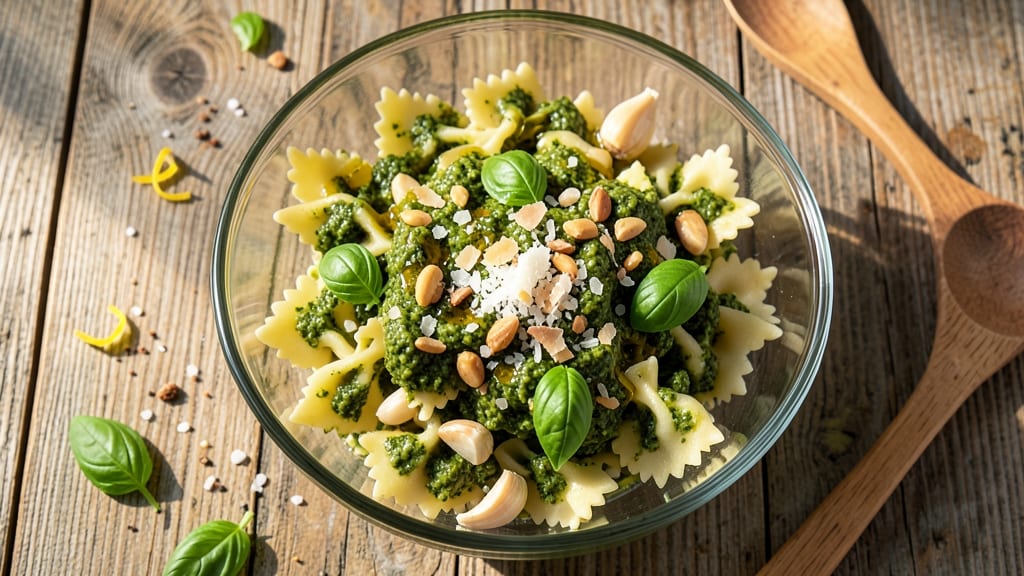
This pesto pasta salad recipe delivers the best balance of vibrant flavors and satisfying textures you'll ever make—no wilted greens or soggy noodles in sight. 💛 The secret lies in a homemade pesto that's rich but not overpowering, and a clever assembly technique that keeps everything crisp and fresh for hours.
I've been perfecting this recipe for summer potlucks, and it consistently gets rave reviews for its bold basil flavor and restaurant-quality presentation.
What sets this recipe apart is the 30-minute preparation time that still yields a dish worthy of a gourmet spread. We're talking perfectly cooked pasta tossed with fresh basil pesto, crisp vegetables, and protein that stays tender—no sad, mushy textures here.
The sauce is emulsified properly so it clings to every noodle without turning the salad into a soggy mess, and the vegetables are added at just the right moment to maintain their crunch.
By the time you're done, you'll have a salad that's as impressive to look at as it is to eat: bright green basil pesto coating al dente pasta, crisp cherry tomatoes, shaved Parmesan, and whatever protein you choose.
The flavors are complex yet balanced—herby, nutty, and slightly tangy from the lemon—with every bite delivering that perfect combination of textures. This is the kind of dish that makes you the star of any gathering.
Best of all, it keeps beautifully for leftovers, making it perfect for meal prep or bringing to parties. The pesto can be made ahead, the pasta cooked just before serving, and the vegetables prepped in advance—just toss everything together when you're ready. Here's how to make it shine.
Ingredients for best pesto pasta salad recipe ever
Sixteen ingredients that pack bold basil flavor and restaurant-quality crunch in every bite.
| Ingredient | Amount | Notes |
|---|---|---|
| Short Pasta (e.g., Farfalle or Penne) 🍝 | 12 oz | Cooked al dente, drained cold |
| Fresh Basil Leaves 🌿 | 2 cups | Packed, stems removed |
| Pine Nuts 🥜 | ½ cup | Toasted for richness |
| Garlic Cloves 🧄 | 4 cloves | Peeled, roughly chopped |
| Parmesan Cheese 🧀 | ¾ cup | Freshly grated from block |
| Extra-Virgin Olive Oil 🫒 | ¾ cup | High-quality, fruity |
| Lemon Juice 🍋 | 2 tbsp | Freshly squeezed |
| Cherry Tomatoes 🍅 | 1 ½ cups | Halved, seeds removed |
| Cucumber 🥒 | 1 ½ cups | Diced, peeled, seeds removed |
| Red Onion 🧅 | ½ cup | Thinly sliced |
| Black Pepper 🌶️ | ½ tsp | Freshly ground preferred |
| Salt 🧂 | 1 tsp | Kosher or sea salt |
| Protein (Chicken or Chickpeas) 🍗 | 1 ½ cups | Cooked, diced chicken or chickpeas |
The basil is non-negotiable—farmers market leaves have the most vibrant flavor, but store-bought works if they're bright green and not wilted. Trader Joe's sells pre-washed basil that's perfect for this. Toast your pine nuts in a dry pan for 3-4 minutes until fragrant—that nutty aroma is what makes this pesto sing. For the Parmesan, grate it yourself from a wedge; pre-grated clumps up and ruins the texture. The cherry tomatoes? Heirloom varieties add the most color, but regular ones work too—just halve them and squeeze out any excess juice.
No fresh basil? Dried basil at half the amount gets you close, but you'll miss that fresh pop. Pine nuts too pricey? Walnuts or cashews work in a pinch—they're nuttier, but still delicious. Chicken not an option? Chickpeas or white beans add hearty texture. For the pasta, cook it one minute less than package instructions and shock it in ice water to stop cooking—this keeps it al dente when tossed. The cucumber needs to be peeled and seeded for that perfect crunch; English cucumbers are ideal, but Persian cucumbers work too if you remove the seeds.
This salad keeps beautifully for 3 days in the fridge, but the pesto starts to brown after 24 hours. To prevent that, pour a thin layer of olive oil on top before sealing. The pasta stays al dente if you store it separately and toss it with the dressing right before serving. For meal prep, portion the protein and veggies ahead—just assemble everything when you're ready to eat. The flavors actually improve overnight as everything melds together.
Why You'll Love This Recipe
- No-Fuss Assembly: I swear, this takes less time than deciding what to watch on Netflix. Toss the cold pasta with fresh basil, toasted pine nuts, and a handful of grated Parmesan—no boiling sauce, no waiting for flavors to meld. Honestly, the hardest part is resisting eating it straight from the bowl while it’s still warm.
- Pine Nut Magic: That nutty crunch from toasted pine nuts? It’s the secret weapon. The garlic gives it a punch, the basil keeps it bright, and the Parmesan ties it all together—like a flavor hug you didn’t know you needed. (Yes, even on a Tuesday night.)
- Picnic to Party: This salad travels everywhere—packed in jars for lunch, served at potlucks, or dumped onto a platter for game day. Swap in cherry tomatoes for a summer twist or add grilled chicken for protein. Between us, it’s the one dish that never feels like a side dish.
- Leftovers That Don’t Suck: Most pasta salads get sad after day two, but not this one. The pesto keeps it vibrant, the pasta stays al dente, and the Parmesan adds richness that only gets better with time. I’ve reheated mine (yes, even cold) and it’s still my go-to weeknight-friendly meal.
Step-by-step instructions for basil-packed pesto pasta salad
Here's how to make the ultimate pesto pasta salad—bold flavors, perfect texture, and no sad wilted greens!
🍳 Step 1: Cook and Chill the Pasta
Bring a large pot of salted water to a rolling boil and cook the 12 oz short pasta (like farfalle or penne) 1 minute less than package instructions for al dente. Drain immediately and rinse under cold water for 30 seconds—this stops the cooking process and prevents mushiness. Transfer to a large bowl and let it cool completely before adding other ingredients. I know it's tempting to toss everything in hot, but chilled pasta absorbs flavors better and keeps the salad crisp.
While the pasta cools, toast the 0.5 cup pine nuts in a dry skillet over medium heat for 3-4 minutes until golden and fragrant. Watch them closely—they burn fast! Remove and set aside to cool slightly. These nuts add richness that balances the bright pesto flavors.
👨🍳 Step 2: Make the Ultimate Pesto Sauce
In a food processor, combine the 2 cups fresh basil leaves, 4 peeled garlic cloves, 0.75 cup Parmesan cheese, and 0.5 tsp black pepper. Pulse until finely chopped but not pureed. With the processor running, slowly drizzle in the 0.75 cup extra-virgin olive oil until smooth. Add the 2 tbsp lemon juice and pulse once more. The sauce should be vibrant green and thick enough to coat the back of a spoon—if it's too thick, add 1 tsp water to loosen.
Here's the thing—don't skip the lemon juice. It brightens the pesto and prevents that flat, olive oil-heavy taste. Taste and adjust seasoning with salt if needed. The pesto should be tangy, herby, and perfectly balanced.
🥘 Step 3: Assemble the Crunchy Vegetable Mix
In a separate large bowl, combine the 1.5 cups halved cherry tomatoes, 1.5 cups diced cucumber, 0.5 cup thinly sliced red onion, and the cooled 1.5 cups protein (chicken or chickpeas). Gently toss with 1 tbsp olive oil to prevent wilting. The key here is to keep everything separate until the final toss—this preserves the crunch and prevents the cucumber from turning soggy.
Real talk: if you're using chicken, make sure it's fully cooled before adding. Warm protein will steam the vegetables and make the salad limp. For extra flavor, toss the protein with a pinch of salt and a squeeze of lemon before adding it to the veggies.
🍽️ Step 4: Combine and Toss to Perfection
Add the cooled pasta to the vegetable mixture and gently fold in half of the pesto sauce, reserving the rest. Taste and adjust seasoning—this is your chance to balance flavors before the final toss. The salad should be vibrant, herby, and just slightly tangy. If it needs more brightness, add another 1 tsp lemon juice. If it needs more richness, sprinkle in a little more Parmesan.
Now for the grand finale: toss everything together with the remaining pesto sauce. Use two large spoons or your hands to distribute the sauce evenly. The pasta should be fully coated but still visible—this ensures each bite has that perfect pesto-pasta ratio. Let it sit for 5 minutes before serving to allow flavors to meld.
⏰ Step 5: Serve with Confidence
Transfer the salad to a serving platter and garnish with any reserved pine nuts and extra Parmesan shavings. Serve immediately while everything is still crisp. This salad keeps well in the fridge for 2-3 hours (covered), but the texture starts to soften after that. For best results, serve at room temperature—it's the perfect make-ahead dish for picnics or potlucks.
Each bite should deliver a perfect balance: creamy pesto, al dente pasta, crunchy vegetables, and protein. The lemon brightens it all, while the Parmesan adds that salty depth. Trust me, this is the pesto pasta salad that will have everyone asking for seconds!
Pro Tips For Making Best Pesto Pasta Salad Recipe Ever
- COOK THE PASTA AL DENTE THEN CHILL: I used to overcook the pasta thinking it’d soften in the salad—wrong. Cook it al dente (one minute less than package says), drain, rinse under cold water, and toss with a splash of pasta water. Let it cool completely in the fridge before mixing with pesto; this prevents a gummy mess and helps the flavors meld.
- TOAST THE PINE NUTS LOW AND SLOW: Pine nuts burn faster than you’d think. Spread them on a dry pan over low heat and stir constantly—if they smell nutty in 30 seconds, they’re ready. Overcooked ones taste bitter, and that’s the last thing you want in your fancy pesto.
- PULSE THE PESTO IN BURSTS: Don’t blend the pesto until it’s smooth—stop when it’s chunky. Use your food processor in short pulses (3-4 seconds at a time) to keep the basil bright and the texture vibrant. Smooth pesto loses freshness fast, and this salad’s all about that herby brightness.
- ADD PARMESAN GRATED FRESH: Pre-shredded cheese has anti-caking agents that make your pesto grainy. Grate your own Parmesan just before mixing it in—even a box grater works. The cheese should dissolve into the pesto like silk, not turn the salad into a textured disaster.
Regional styles of these flavors
Italian Tradition
This salad traces its roots to classic Italian pasta salads like pasta al pesto, where fresh basil pesto coats al dente pasta. In Tuscany, they often add cherry tomatoes and Parmesan for brightness, while Liguria (home of pesto) might include roasted peppers or sun-dried tomatoes.
The key difference here is the crunch factor—we keep veggies separate until the final toss, a trick I picked up from Florentine markets where they serve salads with "living" textures. 🌿
Southern U.S. Twist
In the American South, pesto pasta salads often get a smoky kick—think grilled chicken instead of raw, or a dash of hot sauce in the pesto. I love adding corn (a nod to Texas-style salads) or black-eyed peas for extra protein.
The lemon juice in this recipe keeps it bright, but some Southern cooks swap it for white vinegar to cut through richer flavors. For a Carolina-style version, add collard greens (lightly wilted) for a hearty twist.
Mediterranean Upgrade
For a Greek-inspired take, swap pine nuts for toasted almonds and add kalamata olives to the veggie mix. In Spain, they might use roasted red peppers in the pesto and add sherry vinegar for depth.
I once made a Provençal version with herbes de Provence in the pesto and zucchini instead of cucumber—it was a game-changer for summer BBQs. The olive oil is non-negotiable; use Spanish Picual for a peppery note or Italian Tuscan for fruitiness.
Modern Fusion
Want to go global? Try a Japanese fusion with udon noodles, avocado, and a drizzle of sesame oil in the pesto. For a Mexican twist, add black beans, corn, and cotija cheese, then top with lime zest.
I once experimented with a Thai-inspired version using lemongrass in the pesto and thinly sliced jalapeños—the heat balanced the richness perfectly. The rule? Keep the pesto base but let other cuisines inspire the veggies and proteins.
Protein Swaps
This recipe calls for chicken or chickpeas, but the possibilities are endless. For seafood lovers, try grilled shrimp or white fish like cod. Vegetarians can use marinated tofu or roasted eggplant.
I once made a beefy version with flank steak (thinly sliced) and a splash of balsamic vinegar in the pesto—it was surprisingly delicious. The key is to cook proteins just until done and let them cool completely before adding to the salad to keep everything crisp. 🥩
Seasonal Adaptations
Spring calls for asparagus and radishes, while summer begs for heirloom tomatoes and cucumber. In fall, swap in roasted butternut squash and pecans in the pesto. For winter, use caramelized onions and walnuts—the warmth of the onions balances the pesto’s brightness.
I love making a harvest salad with apples and Gorgonzola for a sweet-savory contrast. The pesto stays the same, but the veggie stars change with the season. 🍂
Nutrition facts
Frequently asked questions
Can I make this pesto pasta salad ahead of time?
Yes, but with a smart strategy! Prepare the pesto and cook the pasta up to 24 hours ahead, then store them separately in the fridge. Keep the vegetables raw until serving. When ready, toss the chilled pasta with the pesto, then add the fresh veggies and protein just before serving. This keeps everything crisp and vibrant. The flavors actually improve overnight as everything melds together!
What's the best pasta shape for this recipe?
Short pasta shapes like farfalle (bowtie), penne, or fusilli work best because they hold the pesto sauce so well. Avoid long pasta like spaghetti—it gets tangled and won't coat evenly. For extra texture, try rotini or gemelli, which add fun twists that catch the sauce beautifully.
How do I keep the cucumber from getting soggy?
Never add cucumber to the salad until the very last minute! First, pat it completely dry with paper towels to remove all moisture. Then, toss it with just 1 tbsp olive oil and a pinch of salt right before combining with the pasta. The key is keeping it separate from the wet pasta and pesto until the final toss—this preserves that perfect crunch for hours!
Can I substitute walnuts for pine nuts in the pesto?
Walnuts add a deeper, earthier flavor that pairs beautifully with basil. Just toast them for 2-3 minutes until fragrant (they burn faster than pine nuts). For a budget-friendly option, try pecans or cashews, though they'll have a slightly different texture. The nutty richness is what balances the bright basil—just don't skip the toasting step!
Why does my pesto turn brown after making the salad?
The basil's natural chlorophyll oxidizes when exposed to air, causing that brown color—it's normal and doesn't affect taste. To prevent it, store any leftover pesto in an airtight container with a thin layer of olive oil poured on top. This creates a barrier that keeps the pesto vibrant green for up to 3 days. For longer storage, freeze the pesto in ice cube trays for perfect portions!