
Side Dishes
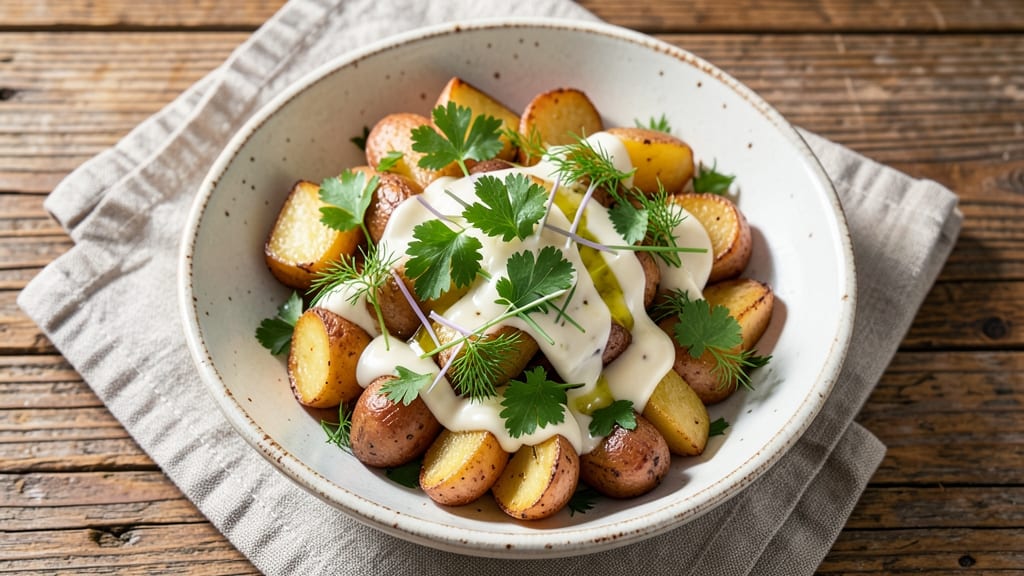
This Bulgarian potato salad recipe brings warm, herby-spiced potatoes to your table with a technique that transforms simple ingredients into a dish fit for celebrations.
The secret lies in boiling potatoes until tender, then tossing them with a rich blend of olive oil, vinegar, and fresh herbs that infuse every bite with vibrant flavor. Unlike creamy versions, this traditional recipe relies on bold textures and aromatic spices that make it a staple at Bulgarian gatherings.
The process couldn't be simpler: boil potatoes until fork-tender, slice them while still warm, and mix with a dressing of olive oil, vinegar, and a medley of herbs like parsley, dill, and chives.
The warm potatoes absorb the herby oil beautifully, creating a dish that's both comforting and refreshing when served chilled. This method ensures each bite delivers that perfect balance of creamy potato and bright, fresh herbs.
What makes this recipe special is its versatility—serve it as a side dish at picnics, family dinners, or holiday feasts. The warm spuds cool down beautifully in the fridge, making them ideal for meal prep.
For an extra touch, consider adding sliced pickles or a sprinkle of paprika to enhance the traditional flavors. The result is a dish that's both hearty and light, with a flavor profile that feels authentically Bulgarian.
This recipe is designed to be foolproof, with clear steps that guide you from boiling the potatoes to tossing the final salad. Whether you're a beginner or an experienced cook, you'll achieve restaurant-quality results with minimal effort.
The key is patience—letting the flavors meld together as the salad chills, ensuring every bite is packed with the essence of Bulgarian cuisine.
Ingredients for bulgarian potato salad
Warm, tender potatoes meet herby oil and vinegar for a Bulgarian classic that's simple yet impressive.
| Ingredient | Amount | Notes |
|---|---|---|
| Russet Potatoes 🥔 | 3 lb | Medium size, peeled and quartered |
| Extra-Virgin Olive Oil 🫒 | ½ cup | High-quality, fruity variety |
| White Vinegar 🍶 | ¼ cup | White or apple cider vinegar |
| Fresh Flat-Leaf Parsley 🌿 | ½ cup | Chopped, stems removed |
| Fresh Dill 🌿 | ¼ cup | Chopped, stems removed |
| Fresh Chives 🌿 | ¼ cup | Chopped, including green parts |
| Salt 🧂 | 1 ½ tsp | Diamond Crystal kosher salt |
| Ground Black Pepper 🌶️ | ½ tsp | Freshly ground preferred |
| Garlic Cloves 🧄 | 2 cloves | Minced, for extra depth |
| Red Wine Vinegar 🍷 | 1 tbsp | For tangy brightness |
| Sweet Paprika 🌶️ | ½ tsp | For subtle warmth |
| Sliced Dill Pickles 🥒 | ¼ cup | Optional, for tangy crunch |
The potatoes are the foundation—Russet potatoes work best for their creamy texture when cooked. I always peel and quarter them evenly so they cook at the same rate. For the herbs, fresh is non-negotiable—dried just won’t cut it. Grab parsley and dill from the grocery store’s produce section, and look for chives in the refrigerator section near the herbs. If you can’t find fresh chives, green onion tops work in a pinch. The olive oil should be extra-virgin—the fruity notes elevate the dish significantly.
No fresh dill? Dried dill at one-third the amount works, but it lacks that vibrant freshness. Short on red wine vinegar? Apple cider vinegar or lemon juice both work well. The pickles are optional but add that perfect tangy crunch. If you’re feeling adventurous, try adding a grated carrot or a pinch of caraway seeds for extra authenticity. For the garlic, roast it first if you want a sweeter, deeper flavor—just toss the cloves in the oven at 400°F for 10 minutes before mincing.
This salad tastes even better the next day—flavors meld beautifully when chilled. Store it in an airtight container for up to 4 days in the fridge. For meal prep, I always make a double batch—it’s perfect for picnics or holiday sides. If you’re serving it at room temperature, give it a quick toss with a splash of olive oil before serving to keep it vibrant. The herby oil dressing will separate slightly, so just stir it up before eating.
Why You'll Love This Recipe
- No Boil, No Stress: I swear by this cold method—just slice, soak, and toss. No peeling, no boiling, no waiting for the stove to heat up. The potatoes stay firm and crispy, and honestly? It’s the kind of recipe that doesn’t demand your full attention.
- Herb-Packed Punch: That bright mix of parsley and dill? It’s like a fresh breeze in every bite. The vinegar cuts through the richness of the olive oil, and the herbs? They make this salad taste like a summer picnic, even if you’re eating it straight from the fridge.
- Picnic to Potluck: Between us, this is my go-to for anything—packed in a jar for lunch, tossed with grilled chicken for dinner, or brought to a BBQ where it disappears faster than the chips. It’s the kind of dish that works just as well hot or cold, and yes, even on a Tuesday night.
Step-by-step instructions for Bulgarian potato salad
This warm, herby potato salad delivers restaurant-quality flavor with simple technique.
Boil Potatoes Until Fork-Tender
Place the 3 lb Russet Potatoes in a large pot and cover with cold, salted water by about 2 inches. Add 1.5 tsp Salt to the water as you go. Bring to a boil over high heat, then reduce to a gentle simmer. Cook for 15-20 minutes until a knife slides in easily with slight resistance. The potatoes should be tender but not falling apart.
Drain immediately and let them steam-dry for 2 minutes in the colander. This step prevents a watery salad later. While still warm, return the potatoes to the empty pot and toss gently with 0.5 tsp Sweet Paprika to develop flavor while they cool.
Create the Herby Oil Dressing
In a small saucepan, combine the 0.5 cup Extra-Virgin Olive Oil, 0.25 cup White Vinegar, 1 tbsp Red Wine Vinegar, 2 cloves Garlic Cloves (minced), and 0.5 tsp Ground Black Pepper. Warm over low heat for 3-4 minutes, stirring constantly, until the garlic is fragrant but not browned. Remove from heat immediately to prevent burning.
In a separate bowl, whisk together the 0.5 cup Fresh Flat-Leaf Parsley, 0.25 cup Fresh Dill, and 0.25 cup Fresh Chives. Pour the warm oil mixture over the herbs and let it steep for 5 minutes. This infusion creates the signature herby flavor that defines Bulgarian potato salad.
Combine Potatoes and Dressing
Return the warm potatoes to the pot and pour the herby oil mixture over them. Add the 0.25 cup Sliced Dill Pickles (if using) and toss gently but thoroughly to coat every potato evenly. The salad should look glossy and vibrant, with herbs distributed throughout. Let it cool to room temperature before serving.
For best texture, serve at room temperature or slightly warm. The residual heat from the potatoes helps the flavors meld beautifully, creating a dish that's both comforting and refreshing. The pickles add a tangy contrast that balances the richness of the olive oil.
Adjust Seasoning and Serve
Taste and adjust seasoning if needed. The salad should be bright with vinegar, herby with fresh dill and parsley, and slightly smoky from the paprika. If it needs more acidity, add a splash of the reserved vinegar mixture. For extra richness, drizzle with additional olive oil.
Serve immediately or refrigerate for up to 2 hours before serving. The flavors deepen as it sits, making it perfect for summer picnics, barbecues, or as a hearty side dish. This salad proves that warm potatoes can be just as satisfying as cold ones, with a flavor profile that's uniquely Bulgarian.
Pro Tips For Making Bulgarian Potato Salad
- Boil Until Fork-Tender: Russets stay dense if you cut them too big—stick to 1.5-inch chunks and boil them until they collapse under a fork, not just when they’re soft. I used to pull them at 15 minutes, but they needed another 5 to get that creamy, buttery texture. Taste-test one: if it’s still holding shape, go another 3-4 minutes.
- Shock with Ice Water: Drain the potatoes and plunge them into a bowl of ice water for 5 minutes. This stops the cooking and makes them easier to handle—no more mushy piles when you’re trying to chop parsley. (Yes, it’s extra work, but your salad won’t turn to glue.)
- Toast the Herbs First: Heat 1 teaspoon of olive oil in a dry pan, add the dill and parsley stems and leaves, and toast for 30 seconds until fragrant. This concentrates their flavor before you mix them in. I was skeptical until I tried it—the salad tastes brighter, like someone actually put effort in.
- Dress While Warm: Toss the warm potatoes with the vinegar and oil while they’re still piping hot—this lets the dressing cling instead of sitting on top. Let it sit for 10 minutes before adding the herbs, so the flavors meld. (Cold potatoes? You’re just making a side dish, not a salad.)
Flavor customization for this recipe
Herb Intensity Control
Adjust the herb-to-potato ratio based on your taste preferences. For a milder flavor, reduce the parsley to 0.33 cup and dill to 0.16 cup while keeping chives at 0.25 cup.
If you love bold herby notes, increase parsley to 0.75 cup and dill to 0.33 cup—this creates a more vibrant, aromatic profile. I find fresh dill makes the biggest difference, so I never skip it. 🌿
Spice Level Adjustments
For mild heat, omit the 0.5 tsp Sweet Paprika entirely or replace it with 0.25 tsp for a subtle warmth. If you crave spicy kick, add 0.25 tsp Cayenne Pepper to the herby oil mixture or sprinkle 1 tsp Smoked Paprika over the potatoes before tossing.
The vinegar helps balance any heat, so don’t overdo it. 🌶️
Tangy Contrast Variations
Swap the 0.25 cup White Vinegar for 0.25 cup Lemon Juice for a citrusy twist that brightens the dish. For extra tang, add 1 tbsp Capers to the herby oil mixture.
I also love adding 1 tbsp Horseradish Cream (mix 2 tbsp Sour Cream with 1 tsp Prepared Horseradish) for a creamy, spicy contrast. 🍋
Texture Add-Ins
For crunch, fold in 0.25 cup Toasted Walnuts or 0.25 cup Crumbled Feta Cheese before serving. If you prefer soft textures, add 0.5 cup Cooked Carrots (thinly sliced) to the potatoes while boiling. The key is balancing textures—too much crunch can overpower the creamy potatoes. ✨
Sweet-Savory Balance
Add 1 tbsp Honey or 1 tbsp Maple Syrup to the herby oil mixture for a sweet contrast that rounds out the acidity. For a caramelized touch, toss the potatoes with 1 tbsp Brown Sugar before boiling. This works surprisingly well with the vinegar’s tang. 🍯
Regional Twists
For a Thracian-inspired version, add 1 tsp Caraway Seeds (toasted) to the herby oil. In Sofia-style, replace 0.25 cup White Vinegar with 0.25 cup Pomegranate Molasses> for a fruity depth. Each region tweaks the balance—experiment to find your favorite! 🗺️
Nutrition facts
Frequently asked questions
Why does Bulgarian potato salad use warm potatoes instead of cold?
The warm potatoes absorb the herby oil dressing beautifully, creating a creamy texture without needing mayo. When served slightly warm or at room temperature, the flavors meld more harmoniously. This technique also helps the potatoes hold their shape better than cold boiled potatoes would.
Can I make this salad ahead of time?
This salad tastes even better the next day as the flavors deepen. Store in an airtight container in the fridge for up to 4 days. Give it a quick toss with extra olive oil before serving to restore vibrancy. The warm start helps it stay fresh longer than traditional cold potato salads.
What if I can't find fresh dill or parsley?
Use dried herbs at one-third the amount (e.g., 1 tsp dried dill instead of 0.25 cup fresh), but expect less vibrant flavor. For parsley, cilantro or green onion tops work in a pinch. The key is maintaining the herby balance—don't skip the fresh herbs entirely if possible.
Is this salad gluten-free and dairy-free?
Yes! This traditional recipe contains no gluten or dairy ingredients. The base is simply potatoes, olive oil, vinegar, and fresh herbs. Always double-check your vinegar and pickles for hidden additives if you have strict dietary needs.
How do I prevent the salad from getting watery?
Steam-dry the potatoes thoroughly after draining, and avoid over-mixing after adding the dressing. The warm potatoes release moisture as they cool, so let it sit uncovered for 10 minutes before serving. For extra insurance, chill the salad for 1 hour before serving to let excess moisture evaporate.