
Sauces & Condiments
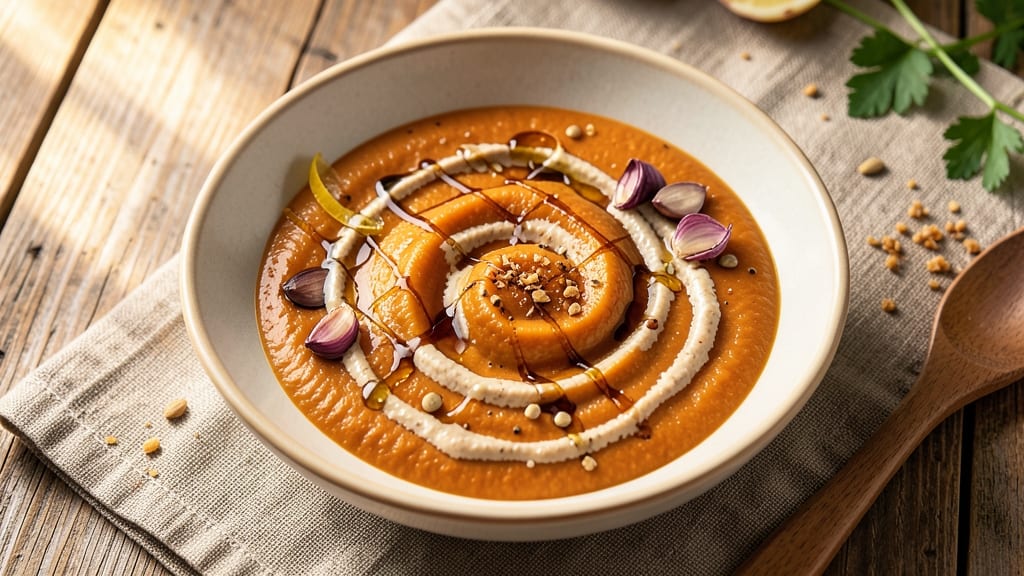
This vegan butternut squash salad dressing transforms simple ingredients into a velvety, caramelized sauce that elevates every dish. 🌟 Roasting the squash first unlocks its natural sweetness, creating a rich, nutty base that blends seamlessly with tangy apple cider vinegar and earthy olive oil.
The result? A dressing so versatile it works on salads, roasted vegetables, or even as a dip for crispy fries.
The secret lies in the roasting process—it caramelizes the squash naturally, eliminating the need for added sugar while deepening its flavor. A touch of maple syrup balances the acidity, while fresh garlic and herbs add brightness.
This dressing stays creamy without dairy, thanks to a blend of olive oil and a hint of tahini for body.
With just 10 minutes of prep and 30 minutes of roasting, you’ll have a jar of dressing that keeps for up to 5 days in the fridge.
It’s perfect for meal prep, adding warmth and depth to any dish without overpowering delicate flavors. The nutty, slightly sweet profile makes it a standout for fall menus.
Pair it with arugula and pomegranate seeds for a restaurant-worthy salad, or drizzle it over roasted Brussels sprouts for a cozy side. The possibilities are endless—let’s make this dressing today.
Ingredients for butternut squash salad dressing
Roasted butternut squash meets tangy vinegar and nutty tahini for a velvety dressing that elevates every dish.
| Ingredient | Amount | Notes |
|---|---|---|
| Butternut Squash 🎃 | 1 ½ lb | Peeled, cubed, roasted until caramelized |
| Extra-Virgin Olive Oil 🫒 | ½ cup | High-quality, fruity variety preferred |
| Apple Cider Vinegar 🍎 | ¼ cup | Raw, unfiltered for best flavor |
| Pure Maple Syrup 🍁 | 2 tbsp | Grade B for richer flavor profile |
| Tahini 🥜 | 1 tbsp | Sesame paste for creaminess |
| Fresh Garlic Cloves 🧄 | 3 cloves | Roasted with squash for depth |
| Fresh Thyme Leaves 🌿 | 1 tbsp | Dried works at 1/3 amount |
| Diamond Crystal Kosher Salt 🧂 | 1 tsp | Adjust to taste after blending |
| Freshly Ground Black Pepper 🌶️ | ½ tsp | Freshly cracked for intensity |
| Filtered Water 💧 | ¼ cup | For thinning if needed |
The butternut squash is the foundation—roast it until caramelized for natural sweetness. Trader Joe's and Whole Foods carry excellent organic varieties with vibrant orange flesh. For best results, use a medium-sized squash (1.5 lbs)—smaller pieces roast more evenly. The garlic should be roasted alongside the squash (no peeling needed) to mellow its sharpness while adding depth. If you prefer a smoother texture, blend the roasted squash with the garlic before adding other ingredients.
No tahini? Substitute with extra olive oil (1 tbsp more) and a pinch of ground sesame seeds for texture. Apple cider vinegar can be swapped for white wine vinegar or lemon juice, though the flavor will differ slightly. For a sugar-free version, reduce the maple syrup to 1 tbsp and add 1 tsp of date syrup. The dressing should be thick but pourable—adjust with filtered water if needed. Store-bought maple syrup works, but local, Grade B has a richer, more complex flavor worth the splurge.
This dressing keeps beautifully in an airtight jar for 5-7 days in the fridge. For longer storage, freeze in 2-tbsp portions—thaw overnight in the fridge. The tahini may separate when refrigerated; simply whisk before use. A drizzle over roasted Brussels sprouts or arugula salad transforms simple dishes into restaurant-quality meals. The nutty depth pairs exceptionally well with earthy greens and pomegranate seeds, making it a standout for fall menus.
Why You'll Love This Recipe
- No Blender Needed: I’ll admit, I hate cleaning blenders—so this dressing comes together with just a whisk and a jar. Roast the squash ahead (or use pre-cut), then mash it with tahini, maple, and vinegar until it’s silky smooth without any fuss.
- Sweet-Savory Magic: That tahini-maple swirl? It’s where this dressing gets its soul. The roasted squash brings deep, caramelized warmth, while the apple cider vinegar cuts through like a crisp autumn breeze—rich but never heavy, with a hint of nutty depth.
- Dresses Everything: Honestly, this isn’t just for salads. Drizzle it over roasted sweet potatoes, toss it with grain bowls, or even use it as a marinade for tofu. I’ve even slathered it on sandwiches—trust me, the tahini ties everything together like glue.
- Lasts a Week: Between us, I make a big batch on Sundays and it’s still vibrant by Friday. The maple and vinegar keep it from separating, and the squash’s natural sweetness only intensifies with time. Plus, it’s way cheaper than buying fancy bottled dressings.
Step-by-step instructions for butternut squash salad dressing
Transform roasted squash into a velvety dressing with balanced sweetness and nutty depth.
🔥 Step 1: Roast the Butternut Squash Until Caramelized
Preheat your oven to 400°F and line a baking sheet with parchment paper. Arrange the 1.5 lb peeled and cubed butternut squash in a single layer, leaving space between pieces for even browning. Drizzle lightly with 1 tablespoon of the extra-virgin olive oil and toss to coat.
Roast for 30-35 minutes until the edges are deeply caramelized and the squash yields slightly when pressed with a fork. The cubes should be tender but still hold their shape—over-roasting turns them to mush. I like to check at 25 minutes to ensure even cooking. Remove from oven and let cool completely before processing.
🍳 Step 2: Blend the Base Ingredients for Smooth Texture
Transfer the cooled roasted squash to a high-speed blender along with the 3 cloves fresh garlic cloves, 1 tablespoon fresh thyme leaves, 1 teaspoon kosher salt, and ½ teaspoon black pepper. Blend until completely smooth, scraping down the sides as needed. This step builds the dressing's foundation—don't rush it.
Add the 0.25 cup apple cider vinegar and 2 tablespoons pure maple syrup next. Pulse a few times to incorporate, then blend again until fully combined. The mixture should be thick but pourable—this is your flavor base before adding the emulsifiers that create the signature creaminess.
🥘 Step 3: Emulsify with Olive Oil and Tahini
With the blender running on low speed, slowly drizzle in the 0.5 cup extra-virgin olive oil through the feed tube. This gradual addition prevents the dressing from breaking. Blend for 1-2 minutes until the dressing thickens and becomes glossy. Stop occasionally to scrape any oil clinging to the sides.
Add the 1 tablespoon tahini and blend for another 30 seconds. The tahini adds rich, nutty depth that balances the squash's sweetness. Taste and adjust seasoning—you may need a pinch more salt or vinegar to achieve perfect harmony between sweet, tangy, and savory notes.
⏰ Step 4: Thin and Adjust Consistency
If the dressing is too thick for your desired consistency, add the 0.25 cup filtered water 1 tablespoon at a time while blending until smooth. For a thicker dressing, let it rest for 10 minutes—it will naturally thicken as the squash starches absorb moisture. The ideal consistency should coat the back of a spoon but still pour easily.
Transfer to a clean jar and store in the refrigerator for up to 1 week. Before using, give it a good shake—the flavors meld beautifully overnight. This dressing elevates simple salads or drizzled over roasted vegetables, bringing autumnal warmth to every bite.
Pro Tips For Making Butternut Squash Salad Dressing
- Roast Squash Until Soft: Don’t just go for color—test doneness with a fork. Overcooked squash turns to mush, and undercooked bits make your dressing grainy. Roast at 400°F (200°C) for 35-40 minutes, then mash while still warm. If it’s tough, give it 5 more minutes.
- Whisk Tahini Last: Tahini thickens fast. Start by emulsifying olive oil, vinegar, and maple syrup first, then slowly drizzle in the tahini while whisking vigorously. Stop when it’s smooth—adding too much makes the dressing clump like glue.
- Use Cold Squash Purée: Let the roasted squash cool completely before blending. Hot purée thins out the dressing, diluting the tahini’s richness. Chill it for 10 minutes, then blend until silky—your dressing will hold its texture better.
- Balance Vinegar Gradually: Apple cider vinegar packs flavor but can overpower. Start with 1 tablespoon, taste, then add more in ½-teaspoon increments. The maple syrup and tahini should mellow the tang—don’t drown them.
Regional styles of these flavors
New England Sweetness
In New England, this dressing gets a maple-forward twist using Grade B maple syrup (up to 3 tbsp) for deeper caramel notes. Locals often add 1 tsp cinnamon and ½ tsp nutmeg to the roasted squash before blending, creating a cozy, spiced profile perfect for harvest feasts.
I’ve found that local Vermont maple syrup elevates the dressing to restaurant-quality richness. 🍁
Southern Smoky Depth
Southern chefs take this dressing to the next level by adding 1 tbsp smoked paprika and ½ tsp liquid smoke to the roasted squash. The result? A smoky-sweet dressing that pairs beautifully with collard greens or black-eyed pea salads.
For extra heat, add 1 tsp hot honey at the end—it’s a Southern favorite. I like using Texas Pete hot sauce for a spicy kick. 🔥
Pacific Northwest Herb Forward
On the West Coast, fresh herbs take center stage. Swap thyme for 1 tbsp fresh rosemary and 1 tbsp fresh sage, then add 1 tsp lemon zest to the roasted squash. The bright, earthy flavors shine in this region’s crisp salads.
For a lighter touch, reduce the tahini to ½ tbsp and add 1 tbsp aquafaba (chickpea brine) for extra creaminess without heaviness. 🌿
Midwest Hearty Twist
In the Midwest, where butternut squash is a staple, this dressing often includes ½ cup cooked quinoa blended into the base for added texture. A splash of apple cider (instead of vinegar) and 1 tsp Dijon mustard add tangy depth.
I’ve seen it drizzled over roasted sweet potatoes and kale salads—it’s a crowd-pleaser at potlucks. 🍂
California Citrus Bright
California’s sunny climate inspires a brighter, citrus-forward version. Add zest from 1 orange and 1 tbsp fresh orange juice to the roasted squash, then finish with 1 tsp orange blossom water for a floral touch.
The dressing works beautifully with avocado and citrus salads. For extra richness, use avocado oil instead of olive oil. 🍊
Global Fusion Adaptations
For a Middle Eastern twist, replace tahini with 1 tbsp tahini + 1 tsp ground cumin and add 1 tsp sumac to the dressing. In Japan, a similar dressing uses mirin instead of maple syrup and sesame oil for a delicate umami note.
The key is balancing sweetness with acidity—adjust vinegar to taste. 🌍
Nutrition facts
Frequently asked questions
Can I make this dressing without roasting the squash?
Roasting is key for the caramelized sweetness, but you can steam or boil the squash first if needed. For best flavor, roast at 400°F for 30 minutes—this develops the nutty depth that sets this dressing apart. If short on time, microwave the cubed squash (covered) for 8-10 minutes at high heat, but the flavor will be less complex.
How do I store leftovers and how long will it keep?
Store in an airtight jar in the fridge for up to 5-7 days. The tahini may separate—just whisk before using. For longer storage, freeze in 2-tbsp portions (thaw overnight in the fridge). The dressing actually improves after 24 hours as flavors meld, making it perfect for meal prep!
What's the best way to use this dressing beyond salads?
This versatile dressing works as a dip for roasted veggies, a glaze for tofu or tempeh, or even a marinade for chicken. Try drizzling it over mashed sweet potatoes or using it as a base for veggie burgers. The nutty sweetness pairs beautifully with savory dishes too—like roasted Brussels sprouts or grilled portobello mushrooms.
Why does my dressing look too thick or too thin?
Thickness depends on squash ripeness and blending time. For thicker dressing, let it rest 10 minutes—it naturally thickens. Too thin? Add 1 tbsp tahini and blend. Too thick? Thin with 1 tbsp water at a time. The ideal consistency coats the back of a spoon but pours easily. Pro tip: Use a high-speed blender for smoother results.
Can I make this dressing spicy or smoky?
For heat, add ½ tsp cayenne or 1 tsp hot sauce at the end. For smokiness, mix in ½ tsp smoked paprika with the roasted squash. The dressing's creamy texture makes it perfect for balancing bold flavors—just adjust to taste after blending.