Sauces & Condiments
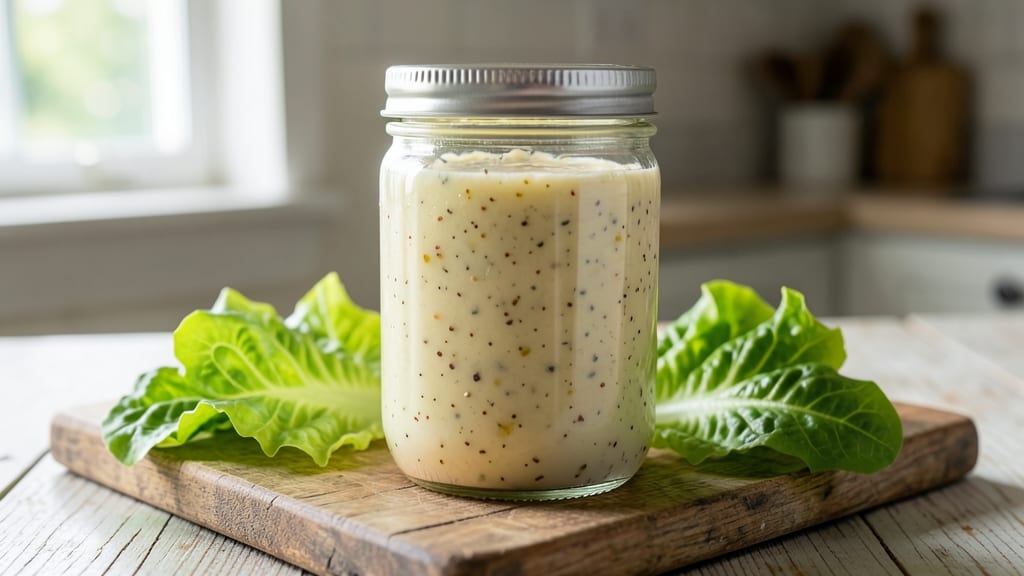
This vegan Caesar salad dressing delivers all the bold garlic, tangy lemon, and creamy richness you crave—without eggs or anchovies. 💛 The secret lies in a blend of nutritional yeast and Dijon mustard that mimics the umami depth of traditional Caesar, while fresh garlic and lemon juice provide that signature zing.
I developed this recipe after years of searching for a plant-based version that didn't compromise on flavor.
The dressing comes together in just 5 minutes with pantry staples you likely already have: olive oil, lemon juice, garlic, Dijon mustard, and nutritional yeast. The key is emulsifying the ingredients properly—whisking vigorously until thick and creamy—so it clings beautifully to romaine lettuce without separating.
This version works equally well as a dipping sauce for veggie sticks or a base for creamy pasta dishes.
What sets this apart is how it replicates the classic Caesar experience while being completely dairy-free and anchovy-free. The nutritional yeast adds that signature cheesy, savory note, while the lemon brightens every bite.
It stays fresh in the fridge for up to 5 days, making it perfect for meal prep—just give it a quick whisk before using to restore its silky texture.
Pair it with crisp romaine, toasted croutons, and vegan parmesan for a full Caesar salad experience, or use it as a marinade for grilled vegetables. The flavor profile is versatile enough to elevate any dish that needs a creamy, tangy boost without animal products.
Ingredients for caesar salad dressing recipe no egg no anchovies
Nine simple ingredients transform into a velvety Caesar dressing without eggs or anchovies.
| Ingredient | Amount | Notes |
|---|---|---|
| Extra-Virgin Olive Oil 🫒 | ½ cup | High-quality, fruity aroma preferred |
| Fresh Lemon Juice 🍋 | ¼ cup | Freshly squeezed, no pulp |
| Raw Garlic Cloves 🧄 | 4 cloves | Peeled, minced finely |
| Dijon Mustard 🍯 | 2 tbsp | High-quality, no additives |
| Nutritional Yeast 🍞 | ¼ cup | Fortified, no additives |
| White Wine Vinegar 🍷 | 1 tbsp | Dry, crisp variety |
| Salt 🧂 | 1 tsp | Kosher or sea salt |
| Black Pepper 🌶️ | ½ tsp | Freshly ground preferred |
| Maple Syrup 🍁 | 1 tbsp | Pure, grade A |
| Cold Water 💧 | ¼ cup | Chilled, for emulsification |
The nutritional yeast is non-negotiable—it delivers that signature umami depth that traditional Caesar relies on. Bob's Red Mill or Bragg are my go-tos, but any fortified brand works. Fresh garlic is essential for that bold flavor punch; roasted garlic works in a pinch but lacks the sharpness. The Dijon mustard should be high-quality—Maille or Amora are reliable choices. For the olive oil, California Avocado Ranch or Colavita brands provide that fruity richness that elevates the dressing. If you're sensitive to acidity, adjust the lemon juice down to 2 tablespoons, but don't skip it entirely—it's what brightens the whole dish.
No Dijon mustard? Whole-grain mustard thinned with a splash of water works in a bind, though the flavor will be slightly milder. Running out of nutritional yeast? Miso paste at half the amount adds depth, though the flavor profile shifts slightly. The maple syrup can be swapped for agave nectar if you prefer, but maple adds a subtle caramel note that complements the garlic beautifully. For a tangier dressing, increase the white wine vinegar by 1 teaspoon. If you're making this ahead, add the cold water last—it helps emulsify the dressing for a smoother texture. The dressing should be thick but pourable; if it separates, whisk in another tablespoon of cold water.
This dressing keeps beautifully in the fridge for 5-7 days when stored in an airtight container. For long-term storage, transfer to a sterilized jar and freeze for up to 3 months. Before using, give it a vigorous whisk to restore its silky texture. A little goes a long way—start with 1 tablespoon per salad and adjust to taste. The flavor actually improves after a day in the fridge as the ingredients meld together. If you're prepping for a crowd, double the recipe; it scales perfectly. For extra richness, stir in 1 tablespoon of vegan mayo just before serving.
Why You'll Love This Recipe
- Here’s what sold me: that deep, savory punch from the nutritional yeast and raw garlic. It’s rich and tangy without needing anchovies or eggs—honestly, it’s the closest I’ve gotten to a classic Caesar flavor, but with a fresh edge that feels like a breath of air.
- No Fuss, No Mess: I swear by this recipe because it’s the kind of dressing that doesn’t demand your full attention—just a quick whisk, a splash of lemon, and you’re done. The Dijon mustard and nutritional yeast do all the heavy lifting while you’re still deciding whether to add croutons or not.
- Umami Bomb: Here’s what sold me: that deep, savory punch from the nutritional yeast and raw garlic. It’s rich and tangy without needing anchovies or eggs—honestly, it’s the closest I’ve gotten to a classic Caesar flavor, but with a fresh edge that feels like a breath of air.
- Weeknight Hero: Between us, this is my go-to when I’m prepping salads for the week or throwing together a last-minute dinner. Drizzle it over grilled chicken, toss it with roasted veggies, or even use it as a marinade—it’s the kind of dressing that makes lazy nights feel intentional.
Step-by-step instructions for vegan Caesar dressing
This method delivers rich, creamy texture without eggs or anchovies—just plant-based power.
🍳 Step 1: Whisk the Base Ingredients
In a medium bowl, combine the 0.5 cup extra-virgin olive oil with the 0.25 cup fresh lemon juice. Whisk vigorously for 30 seconds until fully emulsified—the mixture should look smooth and slightly thickened. This initial blend creates the foundation for your dressing's velvety texture.
Next, add the 2 tablespoons Dijon mustard and 1 tablespoon white wine vinegar. Whisk continuously for another 1 minute until everything is perfectly incorporated. The mustard will help bind the dressing, while the vinegar adds brightness that balances the richness of the olive oil. You're building flavor layers here—don't rush this step.
👨🍳 Step 2: Add Aromatics and Sweetness
Push the minced 4 cloves raw garlic through a fine-mesh strainer directly into the bowl to remove any pulp. This ensures a silky texture without gritty bits. Add the 0.25 cup nutritional yeast and 1 tablespoon maple syrup, then whisk everything together for 2 minutes until the nutritional yeast dissolves completely.
The nutritional yeast provides that signature umami depth traditionally found in anchovies, while the maple syrup rounds out the acidity from the lemon and vinegar. Whisking thoroughly at this stage prevents any graininess from the yeast. If you notice any lumps, strain the mixture through a fine sieve for perfect smoothness.
🥘 Step 3: Season and Emulsify
Add the 1 teaspoon salt and 0.5 teaspoon black pepper, then pour in the 0.25 cup cold water in a slow, steady stream while whisking constantly. The water acts as an emulsifier, helping the oil and vinegar blend smoothly. Continue whisking for 2-3 minutes until the dressing thickens noticeably and coats the back of a spoon.
This is where the magic happens—the cold water helps create that classic Caesar texture without eggs. If the dressing looks too thin after whisking, add 1 teaspoon more cold water and whisk again. For extra creaminess, transfer to a blender and pulse briefly, then strain through a fine-mesh sieve to remove any garlic bits.
⏰ Step 4: Rest and Adjust
Let the dressing sit at room temperature for 10 minutes before using. This resting period allows all the flavors to meld together. Taste and adjust seasoning—you might need a pinch more salt or a splash more lemon juice to balance the flavors to your preference.
The dressing should have a thick, pourable consistency similar to traditional Caesar dressing. If it's too thick after resting, thin with 1 teaspoon cold water at a time until it reaches your desired consistency. Store any leftovers in an airtight container in the refrigerator for up to 5 days, giving it a gentle stir before each use.
Pro Tips For Making Caesar Salad Dressing Recipe No Egg No Anchovies
- Minimize the Garlic Burn: Use a mortar and pestle instead of chopping—smash the cloves first, then add a splash of lemon juice before grinding. I learned this the hard way after my dressing tasted like garlic paste instead of subtle flavor. The acid softens the cloves, so you avoid that harsh, raw bite.
- Whisk in Stages: Start with the mustard and lemon juice, then slowly drizzle in the olive oil while whisking vigorously. Adding all the oil at once just creates a greasy mess—you’ll end up with a dressing that separates no matter how well you shake it later. Work in 1/4 cup increments until fully emulsified.
- Toast the Nutritional Yeast: Lightly toast the nutritional yeast in a dry pan for 30 seconds before adding it to the dressing. It deepens the nutty, cheesy flavor without overpowering the other ingredients. Skipping this step means you’ll miss that rich, umami kick that makes the dressing taste restaurant-quality.
- Strain the Dressing: After whisking, pass the mixture through a fine-mesh sieve into a clean jar. The garlic and mustard can leave gritty bits that ruin texture—especially if you’re using coarse Dijon. It’s an extra 10 seconds, but your salad will feel smoother and more refined.
Troubleshooting this recipe
Separation Issues
If your dressing separates after mixing, don't panic—this is common with oil-based emulsions. The fix is simple: whisk in 1 tablespoon cold water at a time until the mixture recombines. For stubborn separations, transfer to a blender and pulse briefly, then strain through a fine-mesh sieve to restore smoothness.
I've found that adding ½ teaspoon xanthan gum to the dry ingredients prevents future separation—just mix it with the nutritional yeast first. 💡
Grainy Texture
Graininess usually comes from undissolved nutritional yeast or garlic bits. First, try whisking more vigorously for 1-2 minutes to break up any lumps. For stubborn grains, strain the dressing through a fine-mesh sieve or cheesecloth.
If the garlic flavor is too strong, reduce the amount to 3 cloves next time. I've also had success blending the dressing for 10 seconds before straining for ultra-smooth results.
Too Thin or Watery
If your dressing is too thin, the issue is usually too much cold water or insufficient whisking. Let it sit for 5 minutes first—sometimes it thickens naturally. If not, whisk in 1 teaspoon nutritional yeast at a time until it reaches the right consistency.
For extra thickness, mix 1 tablespoon vegan mayo into the dressing. Remember, proper emulsification during mixing is key—whisk for at least 2-3 minutes total. 🥄
Weak Flavor Profile
Weak flavor often means insufficient umami or acidity. Boost the nutritional yeast to ⅓ cup for deeper savory notes. For more tang, add ½ teaspoon extra lemon juice or ½ teaspoon white wine vinegar.
I've also found that adding 1 teaspoon miso paste enhances the umami without altering texture. If the garlic flavor is missing, increase to 5 cloves or add ½ teaspoon garlic powder as a backup.
Storage Problems
If your dressing develops an off smell or mold after refrigeration, it's likely contaminated. Always store in a clean, airtight container and use within 5 days. For freezing, portion into ice cube trays—thawed cubes work perfectly for single servings.
If the dressing separates after refrigeration, whisk vigorously before using. I recommend making fresh batches weekly for best flavor, but this recipe actually improves slightly after 24 hours in the fridge as flavors meld. ❄️
Nutrition facts
Frequently asked questions
Can I make this dressing without nutritional yeast?
Yes, but the flavor will be noticeably different. Nutritional yeast provides that signature umami depth that replaces anchovies. Try substituting with 1 teaspoon miso paste or 2 tablespoons vegan Worcestershire sauce for a similar savory kick. The dressing will still work, but you'll lose that classic Caesar richness.
How do I prevent the dressing from separating?
Whisk vigorously for at least 3 minutes during preparation and add cold water slowly while whisking. For extra stability, blend briefly after mixing or add ½ teaspoon xanthan gum with the nutritional yeast. The key is proper emulsification—don't skip the whisking step!
Is this dressing safe for people with gluten sensitivities?
Only if you use certified gluten-free Dijon mustard and nutritional yeast. Most brands contain gluten, so check labels carefully. For a completely gluten-free version, substitute with 1 tablespoon gluten-free mustard and 2 tablespoons gluten-free nutritional yeast. Always verify ingredient sources when in doubt.
Can I use this dressing on other dishes besides salads?
This versatile dressing works beautifully as a dip for veggie sticks, a marinade for grilled chicken or tofu, or even a creamy sauce for pasta. The garlic-lemon flavor pairs well with almost anything that benefits from a tangy, savory boost. Just adjust the consistency by thinning with more water or thickening with a bit of cornstarch slurry if needed.
What's the best way to store leftovers?
Transfer to an airtight container and refrigerate for up to 5 days. Before using, give it a good whisk to restore its creamy texture. For longer storage, freeze in ice cube trays—thawed cubes work perfectly for single servings. The flavor actually improves slightly after 24 hours in the fridge as the ingredients meld together.