
Salads
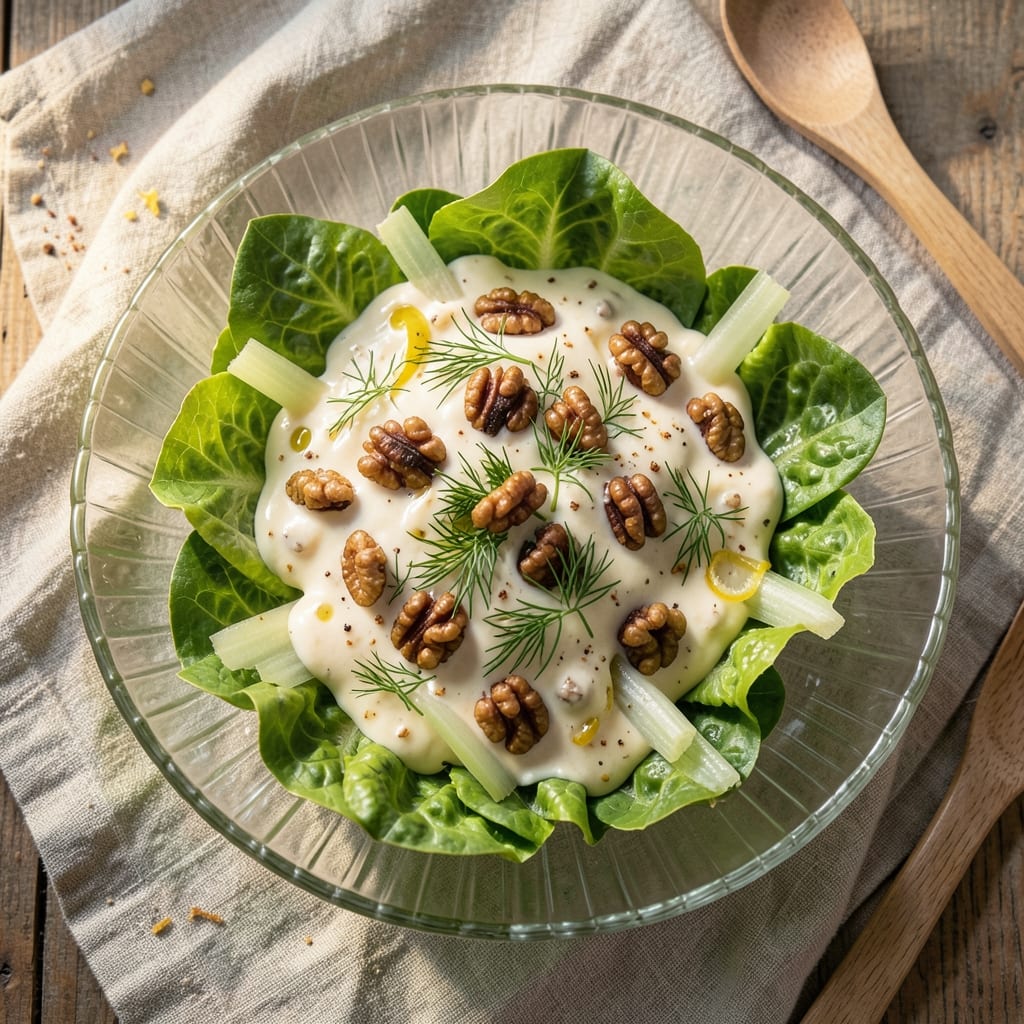
This 1948 Green Goddess Salad brings back the creamy, herbaceous elegance of mid-century dining—without a single drop of mayo. The secret lies in a velvety dressing made from blended celery, fresh dill, and buttermilk, creating a rich, tangy base that clings perfectly to crisp greens and vegetables. I first discovered this recipe while researching vintage cookbooks, and it quickly became a staple for its simplicity and sophisticated flavor.
The dressing is where the magic happens: celery and dill form the foundation, while a touch of garlic and lemon brightens the mix. This version skips mayo entirely, relying instead on buttermilk for creaminess and Greek yogurt for texture. The result is a dressing that’s light yet substantial, with a freshness that makes every bite feel like a taste of history.
Assembling the salad is straightforward—crisp lettuce, thinly sliced cucumbers, and tart apples provide the perfect crunch, while toasted walnuts add a satisfying crunch. The dressing binds everything together, creating a harmonious blend of textures and flavors that’s both refreshing and deeply satisfying. It’s the kind of salad that feels indulgent yet remains light enough for any meal.
Perfect for summer gatherings or a light lunch, this recipe delivers restaurant-quality results with minimal effort. The historical charm of the 1948 version shines through in every layer, making it a timeless addition to any table. Let’s bring this classic back to life.
Ingredients for 1948 green goddess salad
The heart of this vintage salad lies in its creamy, herb-forward dressing—no mayo needed for authentic 1948 flavor.
| Ingredient | Amount | Notes |
|---|---|---|
| Fresh Celery Stems 🧅 | 1 cup | Trimmed and tough strings removed |
| Fresh Dill Weeds 🌿 | 1 cup | Stems included for maximum flavor |
| Buttermilk 🥛 | ½ cup | Full-fat for optimal creaminess |
| Plain Greek Yogurt 🍶 | ½ cup | Non-fat for lighter texture |
| Extra-Virgin Olive Oil 🫒 | ¼ cup | Light fruity variety preferred |
| Garlic Cloves 🧄 | 2 cloves | Peeled and roughly chopped |
| Lemon Juice 🍋 | 2 tbsp | Freshly squeezed from organic lemons |
| Diamond Crystal Kosher Salt 🧂 | ½ tsp | Adjust to taste after initial seasoning |
| Freshly Ground Black Pepper 🌶️ | ¼ tsp | Freshly cracked for best flavor |
| Iceberg Lettuce 🥬 | 1 head | Crisp outer leaves preferred |
| English Cucumber 🥒 | 1 whole | Thinly sliced with peeler |
| Granny Smith Apples 🍎 | 1 medium | Thinly sliced for tart crunch |
| Walnuts 🌰 | ½ cup | Toasted until golden brown |
| Red Wine Vinegar 🍷 | 1 tbsp | Dry variety for tangy balance |
The celery and dill are non-negotiable for that classic Green Goddess profile. Look for vibrant, crisp celery with white ribs—avoid any with brown spots. Fresh dill from the grocery store's refrigerated section works best, but if you're growing your own, the stems add extra depth. For the buttermilk, Kroger's organic brand is my go-to—it's consistently thick and tangy. The Greek yogurt should be plain, non-fat to keep the dressing light; full-fat versions can make it too heavy. Toast the walnuts in a dry skillet over medium heat until they're fragrant and golden—about 3-4 minutes—then let them cool before chopping.
No fresh dill? Dried dill at one-third the amount works in a pinch, though it lacks the brightness. Substituting buttermilk? Plain yogurt plus 1 tbsp lemon juice mimics the tang. The apples can be swapped for tart green pears if you prefer. For extra richness, add 1 tbsp crème fraîche to the dressing. The cucumber should be peeled with a vegetable peeler to remove the waxy skin—Trader Joe's organic cucumbers are my favorite for this. If you can't find Granny Smith, Fuji apples offer a similar crisp texture.
The dressing keeps for 3 days in the fridge, though it's best used within 24 hours for maximum freshness. Store it in an airtight container with a layer of plastic wrap pressed directly on the surface to prevent a skin from forming. The lettuce will stay crisp for 2 days if wrapped in a damp towel and stored in a sealed container. For make-ahead convenience, pre-chop all vegetables and store them separately in the fridge—assemble the salad just before serving to maintain that perfect crunch. The toasted walnuts can be stored in an airtight container at room temperature for up to 2 weeks.
Why You'll Love This Recipe
- No-Chop Shortcut: The celery and dill barely need chopping—just rough dice and a quick pulse in the food processor. I’ve made this while scrolling through emails; it’s that simple.
- Creamy-Green Magic: That buttermilk-yogurt blend? It’s tangy, rich, and just thick enough to cling to every crisp celery strand. Honestly, the first bite makes me want to eat it with a spoon.
- Potluck Hero: Bring it to a picnic, BBQ, or holiday spread—it’s refreshing but never boring. The olive oil keeps it from drying out, so it stays vibrant even after hours in the sun.
- Leftovers That Work: Make a double batch; the dressing separates slightly but just stir it back together. I’ve had this for lunch three days in a row, and it’s still the star of my sad desk salad.
Step-by-step instructions for celery-dill creamy dressing without mayo
This classic 1948 recipe delivers velvety texture and vibrant flavor using only fresh ingredients.
Toast the Walnuts for Nutty Depth
Spread the 0.5 cup walnuts on a dry baking sheet and toast in a 350°F oven for 8-10 minutes until they release their aroma and turn golden brown. Watch closely—they'll darken quickly. Let cool completely before chopping coarsely with a chef's knife. The toasted walnuts add crunch and richness that balances the dressing's creaminess.
This step is crucial—raw walnuts lack the same depth of flavor. I like to pulse them briefly in a food processor after toasting for even texture, but a knife works just fine. Set them aside for when we combine everything at the end.
Blend the Fresh Herb and Celery Base
In a high-speed blender, combine the 1 cup fresh celery stems (trimmed and strings removed), 1 cup fresh dill weeds (stems included), 2 cloves garlic (peeled), 0.5 cup buttermilk, and 0.5 cup plain Greek yogurt. Blend until completely smooth, scraping down the sides as needed. This base creates the signature creamy texture without any mayo.
The buttermilk and yogurt work together to create that signature tangy richness while keeping the dressing light. I've found that using a high-speed blender is essential—regular blenders often leave the celery stems fibrous. Blend until no visible texture remains, about 30-45 seconds total.
Emulsify with Olive Oil and Acid
With the blender running on low speed, slowly drizzle in the 0.25 cup extra-virgin olive oil while simultaneously adding the 2 tbsp lemon juice and 1 tbsp red wine vinegar. This gradual addition creates a stable emulsion that won't separate. The acid from the lemon and vinegar brightens all the flavors while helping to balance the richness.
After adding all the liquids, blend for another 15-20 seconds until completely smooth. Taste and adjust seasoning with 0.5 tsp kosher salt and 0.25 tsp freshly ground black pepper. The dressing should taste vibrant and slightly tangy—this is your flavor foundation before adding the vegetables.
Prepare the Crisp Vegetable Base
Core the 1 head iceberg lettuce and separate the leaves, discarding any wilted outer leaves. Thinly slice the 1 whole English cucumber using a peeler or mandoline for delicate ribbons. Peel and thinly slice the 1 medium Granny Smith apple (about ¼-inch thick) for tart contrast. Arrange all components on a large platter or individual plates, keeping the greens at the base.
The crispness of the lettuce and cucumber provides the perfect textural contrast to the creamy dressing. I like to arrange the apple slices in concentric circles on top—their tartness cuts through the richness beautifully. Keep everything chilled until ready to serve to maintain maximum crispness.
Assemble and Serve Immediately
Just before serving, drizzle the dressing generously over the vegetable base, allowing it to pool slightly in the center. Sprinkle the toasted walnuts evenly over the top, pressing them gently into the dressing. The walnuts should be distributed throughout rather than clumped together for even texture in every bite.
This salad should be served immediately while all components are at their peak freshness. The dressing will cling beautifully to the crisp vegetables, creating that signature Green Goddess experience. For best results, serve within 30 minutes of assembly to prevent the lettuce from wilting.
Pro Tips For Making 1948 Green Goddess Salad
- CHOP CELERY THIN: Those thick celery stalks? They’ll turn your salad into a mouthful of crunch instead of a silky texture. Run them through a mandoline or knife on a sharp angle—1/8-inch slices blend better and release flavor faster. (Yes, it’s tedious, but your dressing will actually coat them.)
- STRAIN EXTRA DILL JUICE: Fresh dill is the soul of this salad, but packed leaves make a watery mess. After chopping, wrap them in a clean kitchen towel and squeeze gently—you’ll get 1-2 teaspoons of bright green liquid that thickens the dressing instantly. (Trust me, it’s worth the effort.)
- MIX YOGURT AND BUTTERMILK LAST: Combine them too early, and the dressing separates like a bad smoothie. Keep them separate until you’re ready to blend, then whisk in the olive oil first—this emulsifies the fats before the tangy liquids cut in. Stir vigorously for 30 seconds; it’ll hold together better.
- SALT THE CELERY WATER: That celery soak water? Don’t pour it down the drain—dissolve 1/4 teaspoon of salt in it. The salt enhances the celery’s flavor before it hits the dressing, and the water stays crisp longer. (I learned this the hard way after a sad, limp salad.)
Essential equipment for 1948 green goddess salad
Blender Essentials
A high-speed blender is absolutely essential for achieving that signature creamy texture without mayo. I use my Ninja BN601—it handles the fibrous celery and dill stems beautifully, creating a completely smooth dressing. If you don't have one, a regular blender will work but may leave some texture. For budget-friendly options, the Hamilton Beach 58343R is a great mid-range choice that still delivers excellent results. 💫
Food Processor for Walnuts
While a chef's knife works perfectly fine for chopping toasted walnuts, I find a small food processor saves time and creates more even pieces. My Cuisinart DLC-2AC mini processor handles 0.5 cup walnuts in seconds after toasting. For a manual alternative, use a rolling pin to crush the nuts—just be prepared for slightly uneven texture. The key is to toast them properly first for maximum flavor impact.
Knife & Cutting Tools
A sharp 8-inch chef's knife is your best friend for prepping this salad. I recommend the Wüsthof Classic—its German steel holds an edge beautifully. For the cucumber and apple, a mandoline slicer like the OXO Good Grips creates perfectly thin, even slices. If you prefer hand-cutting, use a peeler for delicate cucumber ribbons. Always keep your knives sharp for clean cuts that maintain crispness.
Measuring Tools
Precision matters with this recipe, especially for the dressing. I use a stainless steel measuring cup set like the OXO Good Grips for accurate measurements of buttermilk and yogurt. For the 2 tbsp lemon juice and 1 tbsp red wine vinegar, a small measuring spoon set ensures perfect balance. The Diamond Crystal kosher salt should be measured with a 1/4 tsp measure—too much can overpower the delicate flavors.
Serving Essentials
Presentation matters for this elegant salad. I serve it on a large ceramic platter like my Le Creuset Stoneware—it keeps everything chilled while looking beautiful. For individual servings, use white porcelain plates to let the vibrant green colors shine. A salad spinner like the OXO Good Grips helps dry lettuce leaves thoroughly before assembling, preventing a soggy base. 🥗
Storage Containers
For make-ahead prep, I store the dressing in a glass airtight container with a silicone lid—like the Weck 1L jar. The vegetables go in separate containers with paper towels between layers to absorb moisture. For the toasted walnuts, an amber glass jar with a tight seal keeps them fresh for up to 2 weeks at room temperature. Always label containers with dates to track freshness.
Nutrition facts
Frequently asked questions
Why does this 1948 version skip mayo?
This vintage recipe avoids mayo to keep the salad light and refreshing—perfect for mid-century dining trends that favored fresh, bright flavors. The buttermilk and Greek yogurt create the same creamy texture while keeping it tangy and crisp. Historically, mayo was used sparingly in 1940s recipes due to ingredient shortages, making this a practical yet delicious alternative.
Can I make this dressing ahead of time?
Yes, but use it within 24 hours for best flavor. Store in an airtight container with plastic wrap pressed directly on the surface to prevent a skin from forming. The dressing will thicken slightly after chilling—just stir before using. For longer storage, freeze in 1-tablespoon portions and thaw overnight in the fridge.
What if I don't have fresh dill?
Use 1 tablespoon dried dill as a substitute, but reduce the amount by one-third since dried herbs are more concentrated. For extra flavor, add ½ teaspoon dried tarragon or a pinch of dried chives. If you're missing celery entirely, blend in ½ cup extra cucumber for moisture and mild flavor.
How do I keep the lettuce crisp for serving?
Wrap the lettuce in a damp paper towel and place it in a sealed container with a dry towel on top. Store in the fridge for up to 2 days. For extra crispness, spin the lettuce thoroughly before assembling and serve immediately after dressing. Avoid cutting lettuce too far in advance—prepare it just before plating.
Is this salad suitable for a vegetarian potluck?
This recipe is fully vegetarian and packed with protein from the Greek yogurt and walnuts. The creamy dressing and fresh vegetables make it a crowd-pleaser. For added richness, serve with crusty bread or warm pita triangles on the side. The tangy flavors balance perfectly with heartier vegetarian dishes.