Sauces & Condiments
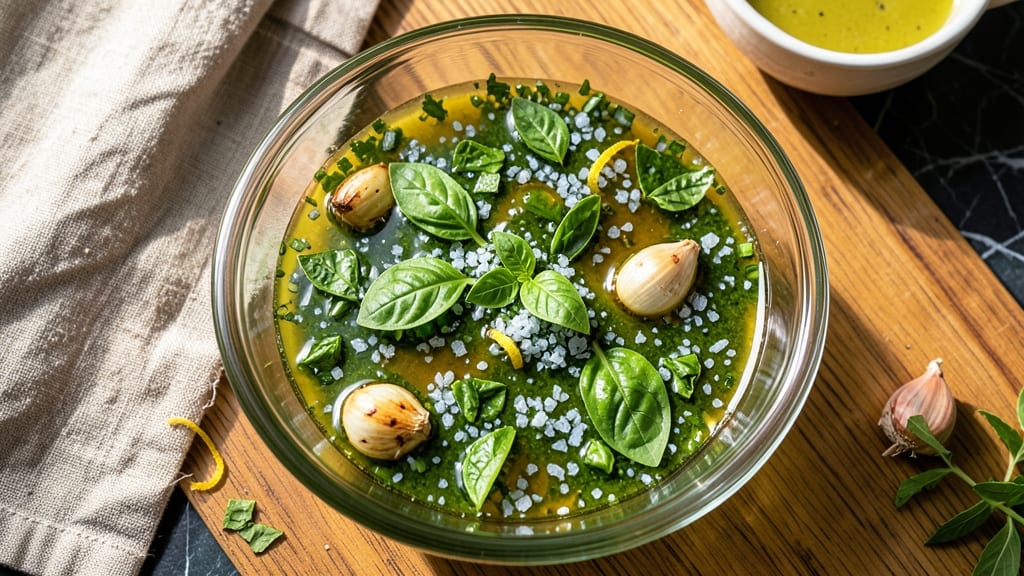
This basil mint salad dressing recipe transforms simple ingredients into a vibrant, herb-packed sauce that elevates every dish without mayo or dairy. The secret lies in balancing fresh basil and mint with bright lemon juice and extra-virgin olive oil, creating a dressing that’s light yet deeply flavorful.
I developed this recipe after craving a refreshing, herb-forward sauce that worked for everything from summer salads to grilled vegetables.
What makes this dressing stand out is its versatility—it brightens leafy greens, pairs perfectly with grilled chicken or fish, and even enhances vegetarian bowls. The fresh herbs infuse the oil and vinegar base, delivering a bold, aromatic flavor that’s impossible to resist.
Plus, it comes together in just 5 minutes with ingredients you likely already have on hand.
The result is a dressing that’s creamy without dairy, tangy without overpowering, and packed with the freshness of summer. Each component—lemon juice, garlic, Dijon, and herbs—plays a crucial role in creating depth and balance.
Store it in the fridge for up to 1 week, shaking gently before each use to redistribute the herbs.
Serve it over mixed greens, drizzle it over grilled meats, or use it as a marinade for tofu or chicken. This dressing is the perfect way to add bright, herbaceous flavor to any meal without the heaviness of traditional creamy dressings. Let’s make it!
Ingredients for basil mint salad dressing
Ten simple ingredients transform into this vibrant, herb-forward dressing that rivals any store-bought version.
| Ingredient | Amount | Notes |
|---|---|---|
| Fresh Basil Leaves 🌿 | 1 ½ cups | Packed, stems removed, vibrant green |
| Fresh Mint Leaves 🍃 | ¾ cup | Bright green, stems removed |
| Extra-Virgin Olive Oil 🫒 | ¾ cup | High-quality, fruity, cold-pressed |
| White Wine Vinegar 🍷 | ¼ cup | Dry, crisp, food-grade |
| Fresh Lemon Juice 🍋 | ¼ cup | Freshly squeezed, no seeds |
| Garlic Cloves 🧄 | 2 cloves | Fresh, peeled, minced fine |
| Dijon Mustard 🌶️ | 1 tbsp | High-quality, smooth texture |
| Raw Honey 🍯 | 1 ½ tbsp | Local, unprocessed, mild flavor |
| Sea Salt 🧂 | ½ tsp | Fine grain, Diamond Crystal preferred |
| Freshly Ground Black Pepper 🌶️ | ¼ tsp | Coarsely ground, freshly cracked |
The quality of your herbs makes all the difference here. Fresh basil and mint should be vibrant green with no wilting—Whole Foods or local farmers markets are ideal for sourcing these. Look for leaves that are firm to the touch, not rubbery or yellowing. For the olive oil, California extra-virgin brands like Corto or Lucini elevate the flavor profile significantly. The garlic should be plump and firm, not sprouting or soft. Store-bought vinegar works, but if you can find organic, balsamic-infused white wine vinegar, it adds subtle depth. The honey should be raw and local if possible—Trader Joe's often carries excellent options in small jars.
No fresh mint? Spearmint or peppermint at the same quantity works, though flavor will differ slightly. Substituting apple cider vinegar for white wine vinegar keeps the dressing tangy but adds a fruity note. For those avoiding honey, agave nectar or maple syrup at the same amount maintains sweetness. If Dijon mustard is unavailable, whole-grain mustard thinned with water provides similar texture. The dressing's balance relies on all components—skipping any risks flatness. For extra creaminess without dairy, add 1 tbsp silken tofu puree or 1 tsp ground flaxseed soaked in 2 tbsp water as a binder.
This dressing stays fresh for up to 1 week in an airtight container in the refrigerator, though flavor peaks within the first 3 days. To preserve freshness, pour a thin layer of extra-virgin olive oil over the top before sealing. Shake gently before each use to redistribute the herbs. For longer storage, freeze in 1-tbsp portions in ice cube trays—thaw and shake to re-emulsify. The dressing works best at room temperature, so let it sit for 5-10 minutes before drizzling. Leftovers can be used as a marinade for grilled vegetables or tofu, adding an herbaceous punch to proteins.
Why You'll Love This Recipe
- I swear by this trick: just tear the basil and mint leaves right off the stem—no knife, no fuss. The stems add a subtle earthiness that’s way better than anything I’ve bought pre-chopped.
- No-Chop Magic: I swear by this trick: just tear the basil and mint leaves right off the stem—no knife, no fuss. The stems add a subtle earthiness that’s way better than anything I’ve bought pre-chopped.
- Bright & Balanced: That lemon juice cuts through the richness of olive oil like a summer breeze, while the mint keeps it from tasting flat. Honestly? It’s the kind of dressing that makes you forget about store-bought bottles forever.
- Picnic-Proof Perfection: Slather it on grilled chicken, toss with roasted veggies, or drizzle over crusty bread—it’s my go-to for lunchboxes, potlucks, or lazy Sunday brunches. (Yes, even on a Tuesday night.)
Step-by-step instructions for basil mint salad dressing
This vibrant dressing delivers fresh herb brightness without mayo's heaviness.
Prepare the Herb Base
In a food processor, combine the 1.5 cups fresh basil leaves and 0.75 cup fresh mint leaves. Pulse until finely chopped but not pureed—you want visible herb texture, not a smooth paste. This preserves the herbs' distinct flavors while creating a cohesive dressing. Stop processing when the mixture resembles coarse herb confetti.
Transfer the chopped herbs to a medium bowl. Here's the thing—if your herbs are particularly wet, pat them dry with paper towels first. Excess moisture dilutes the dressing and prevents proper emulsification later. The ideal herb mixture should be bright green and vibrant, with no visible stems.
Blend Wet Ingredients
In the food processor, add the 0.75 cup extra-virgin olive oil, 0.25 cup white wine vinegar, 0.25 cup fresh lemon juice, 2 cloves minced garlic, 1 tbsp Dijon mustard, and 1.5 tbsp raw honey. Process continuously for 30-45 seconds until completely smooth. The mixture should be homogeneous with no visible streaks of oil or vinegar.
Taste the mixture at this stage—it should be tangy from the vinegar and lemon, with a subtle sweetness from the honey. If it tastes too sharp, add a pinch more honey. If it lacks brightness, add another tablespoon of lemon juice. This is your flavor baseline before incorporating the herbs.
Combine and Emulsify
With the food processor running, slowly pour the herb mixture through the feed tube while continuing to process. This gradual incorporation prevents the herbs from clumping and ensures even distribution. Process for another 15-20 seconds until the dressing is perfectly emulsified with no visible herb chunks larger than ¼ inch. The texture should be silky and cohesive.
For a true professional finish, strain the dressing through a fine-mesh sieve into a clean bowl. This removes any remaining herb stems while maintaining the vibrant color. The dressing should now have a rich green hue with flecks of visible herbs—this is what makes it visually appealing and flavorful.
Season and Rest
Transfer the dressing to a measuring cup or bowl and stir in the 0.5 tsp sea salt and 0.25 tsp freshly ground black pepper. Taste again and adjust seasoning if needed—this is where you fine-tune the balance between sweet, tangy, and herbal notes. The dressing should be bright, balanced, and ready to use immediately.
For optimal flavor development, let the dressing rest at room temperature for 15-20 minutes before using. This allows the flavors to meld and the emulsification to stabilize. Store any unused dressing in an airtight container in the refrigerator for up to 5 days, shaking well before each use. The flavors will continue to deepen over time.
Pro Tips For Making Basil Mint Salad Dressing
- STACK THE HERBS: Use a mortar and pestle for the basil and mint—crushing them releases more oils and aroma than just chopping. I learned this the hard way after making dressing that tasted flat; now I never skip it.
- SALT THE VINEGAR: Add a pinch of fine sea salt to the white wine vinegar before blending—it rounds out the sharpness and balances the dressing. Sounds weird, but it works every time, especially with cheap vinegar.
- BALANCE THE OIL: Measure the olive oil first, then add lemon juice drop by drop until it tastes bright, not bitter. I used to dump it all in and ended up with a greasy mess; now I taste as I go.
- STRAIN THE SEEDS: Run the finished dressing through a fine-mesh sieve to catch basil and mint stems—it keeps the texture silky smooth. Lazy me used to skip this, but the difference in mouthfeel is noticeable.
Essential equipment for this dish
Food Processor Essentials
You’ll need a high-quality food processor—I recommend the Ninja BN601 for its powerful motor and sharp blades. The blade should chop herbs finely without pureeing them completely, preserving texture.
If you don’t have one, a mortar and pestle works for herbs, but blending wet ingredients will require a whisk or immersion blender. 💡
Measuring Tools
Precision matters with liquids! Use a liquid measuring cup for the olive oil, vinegar, and lemon juice to avoid spills. A small digital scale (like the OXO Good Grips) helps measure honey and mustard accurately.
For herbs, a spoon or small cup works, but pack them tightly to match the measurements. I swear by Whisk brand measuring spoons for their durability.
Mixing Bowls
A stainless steel mixing bowl (like OXO Good Grips) is ideal for combining ingredients—it’s non-reactive and easy to clean. For straining, a fine-mesh sieve (I use Hudson Fine Mesh) removes herb stems while keeping flavor.
If you’re short on time, a cheesecloth works too, but it’s messier. Always use glass or stainless steel to avoid plastic odors ruining the dressing.
Storage Containers
Transfer the dressing to an airtight glass jar (like Le Parfait) or a small mason jar for fridge storage. The jar should hold at least 1.5 cups to accommodate the full recipe.
Label it with the date—this dressing peaks within 3 days but stays fresh for up to 1 week. For portion control, freeze 1-tbsp servings in ice cube trays and transfer to a bag for easy thawing. ✨
Optional Tools
A garlic press speeds up mincing, and a microplane ensures fine garlic texture without overworking it. For extra creaminess, a silken tofu blender (like Vitamix) can puree 1 tbsp silken tofu for a dairy-free binder.
If you love garnishes, keep fresh herbs and edible flowers on hand—sprinkle them over salads right before serving for a pop of color. 🌿
Nutrition facts
Frequently asked questions
Can I make this dressing without a food processor?
Yes! You can blend the wet ingredients in a small blender or whisk them in a bowl until smooth, then finely chop the herbs by hand with kitchen shears. For best texture, pulse the herbs in a mini food processor or use a mortar and pestle to create small pieces. The flavor will still be vibrant, though slightly less uniform.
How do I adjust the dressing for spicier or milder flavor?
For extra heat, add ½ tsp red pepper flakes or a pinch of cayenne. For milder flavor, reduce the garlic to 1 clove or omit the Dijon mustard. The honey-to-vinegar ratio can also be tweaked: add ½ tbsp more honey for sweetness or 1 tbsp extra vinegar for tang. Always taste as you go!
What are the best ways to use this dressing beyond salads?
This dressing excels as a marinade for grilled chicken, fish, or tofu (30-60 minutes before cooking). Drizzle it over warm grain bowls with roasted veggies, or use it as a dip for crudités or fresh bread. It also brightens pasta dishes—toss with cold spaghetti or use as a sauce for pesto-free risotto.
Why did my dressing separate after refrigeration?
This happens when the emulsification breaks down. Before using, shake the jar vigorously for 20-30 seconds to re-combine. For a permanent fix, whisk in 1 tsp Dijon mustard or 1 tbsp honey to help stabilize. Always store it in an airtight container and avoid adding too much liquid when adjusting flavors.
Can I substitute dried herbs instead of fresh?
Fresh herbs are ideal for their vibrant flavor, but you can use ½ tsp dried basil and ¼ tsp dried mint per tablespoon of fresh called for. Dried herbs lack moisture, so reduce the vinegar by 1 tbsp to prevent over-acidity. Toast the dried herbs lightly in a dry pan for 30 seconds to enhance their aroma before adding.